Showing posts with label media criticism. Show all posts

05 December 2016

Portrayal of Natives in Media

Sociological Critical Analysis of Native Representation in Media

The portrayal of natives in media affects how they are treated by outsiders, and often impacts how natives see themselves and perceive their own potential for success. For perspective, we will cover the history of native representation in media like film. We’ll discuss the implications of media stereotypes and their effect of youth self-esteem. That labeling people as “oppressed” by on media stereotypes is an overgeneralization. How typecast John Wayne’s cowboy characters promote a dangerously racist hegemony of imperialism and genocide. We’ll remind you that natives are not extinct. It may look that way in the media, but just like with other minority groups, there is a disproportionately low use of native actors in Hollywood.

Yet 21st century content creators have an exciting opportunity to right some of the wrongs with how indigenous people are represented in media, by using more native voices in modern contexts. Strides in the right direction have been taken by Canada and Australia, but there is much work to be done. This critical analysis will review this theme through the lens of several television shows (Murdoch Mysteries, and Roseanne), in addition to reinforcing some of the sociological concepts found in the documentary film, Reel Injun. “The media plays a very important part in forming the discourse on Aboriginalism, as many are influenced by media representation and base their views on Indigenous people as a result of these representations” (Garetto 2013).

Historically speaking, media has been fascinated with portraying Native Americans as exotic novelties from as far back as the early days of Edison’s moving pictures in the late 1800s. However around the 1930s the emphasis shifted to showing Natives as dehumanized savages to be killed indiscriminately in westerns. John Wayne’s movie characters usually portrayed that he was more a “true American than natives, who must be stopped from settling their own land” (Reel Injun 2009). This interpretation of that era’s media glosses over the genocidal message being presented to the audience, “A good injun is a dead injun” (Reel Injun 2009). This fictional depiction of the “Indian resistance served to fuel the myths of conquest and glory, and the American divine right to conquest” and occupation of the land (Common Portrayals of Aboriginal People n.d.).


How did our society come to accept the socialized hegemony of such harsh marginalization of an entire ethnicity? In part, this false consciousness has been perpetuated through the use of stereotypes in mass media. Often audiences use mass media hoping to gain information about the world and their identity, as well as find models to imitate (Berger 2014). Negative models in mass media affect the self-esteem of impressionable youth, this implicates how this group views their own potential for success.

“Ward Churchill argues that the myths and stereotypes built up around the Native… served to explain in positive terms the decimation of Native tribes and their ways of life by ‘advanced’ cultures in the name of ‘progress,’ thereby making it necessary to erase the achievements and very humanity of the conquered people. ‘Dehumanization, obliteration or appropriation of identity, political subordination and material colonization are all elements of a common process of imperialism,’ he says. ‘The meaning of Hollywood’s stereotyping of American Indians can be truly comprehended only against this backdrop’” (Common Portrayals of Aboriginal People n.d.). Due to the dehumanizing effect stereotypes have of the perception of natives by consumers of popular culture, there are few roles offered to Native Americans in media. The few roles out there are typically objectified extras, historical caricatures.

Natives make up around 2% of the American population but were only represented in less than 0.4% of characters in television and film (Leavitt 2015).  Considering these population statistics, “Native Americans experience ‘relative invisibility’ in the media. When they are included, they generally are portrayed as historical figures – individuals from the 18th and 19th centuries who wear buckskin, ride horses or live in teepees. When they are shown as modern people, they often are associated with addiction, poverty and a lack of formal education” (Leavitt 2015). “In the few television programs that Indigenous people are shown in, it is usually in a negative light, and they are presented in a scenario as the victim”… or as a token in a specialized role (Garetto 2013). Native characters are generally objectified into stereotypes and used as a plot device, as an “allegorical tool for any oppressed people” the author may want to reference metaphorically in their story (Reel Injun 2009).

The three most common of these stereotypes of Natives typically seen in media are the Indian Princess, the Native Warrior and the Noble Savage:


  • “The Indian Princess is the Native beauty who is sympathetic enough to the white man’s quest to be lured away from her group to marry into his culture and further his mission to civilize her people…. The (first) nations of this country never had a concept of royalty. We do not have kings, queens or princesses.” (unless you mistakenly count powwow princesses, which is more a non-political contest like a beauty queen) …

  • The Native Warrior is fierce and formidable and a threat to civilized society. Bare-chested and brandishing a war lance, this warrior is the epitome of the savagery that must be courageously overcome by “progressive elements” pushing West…

  • The mythic Noble Savage... Elevated to a sphere of goodness unreachable by those in contaminated White society and usually possessing some spiritual connection to the land… the Noble Savage communes in a cloud of mysticism and places no value on material possessions.” (Common Portrayals of Aboriginal People n.d.)

Recognizing these stereotypes as caricatures is the first step to improving how Natives are portrayed in media. Yet, “most destructive to the image of Aboriginal people is the lack of character and personality afforded them by the media. Aboriginal people are almost always cast in supporting roles or relegated to the background, and are rarely allowed to speak or display their complexity and richness as human beings. Whatever character they do have, tends to reveal itself only in terms of their interactions with White people. Rarely is an Aboriginal portrayed as having personal strengths and weaknesses, or shown acting on his or her own values and judgements” (Common Portrayals of Aboriginal People n.d.).  This rule of thumb is quite similar to the guidelines set by the Bechdel test for interpreting the roles of female characters in media.

However, as underrepresented as women are in film statistically, there may be a greater social problem of cultural misalignment with how minority groups like Native Americans are portrayed in media. Often “artistic license is liberally applied in portraying dress, customs, livelihoods and spiritual beliefs and ceremonies. This reduction of cultural heritage and diversity (which most audiences do not even notice) is seen by critics as both a symptom of the problem (not taking Aboriginal people seriously) and an unconscious yet systematic way of perpetuating erroneous stereotypes.” (Common Portrayals of Aboriginal People n.d.)

So in analyzing the following two television shows, I have considered the above points related to the portrayal of Natives in media. These points relate to common stereotypes, misuse of cultural dress, statistically low casting in major roles (often going to poorly painted, non-native actors), the socialized justification of genocide, and eminent domain as a symptom of the “divine right” of colonization. These things are considered in the context of media’s use of revisionist history myths that glamorize the genocide of western expansion and missionaries’ systematic destruction of first nations’ faiths and cultures. 

First, let’s discuss how two different television shows that portrayed natives with more respect paid to the modern native experience.  The episodes I chose seemed to have less objectified native characters than what you usually find in 20th century media like westerns, a genre well discussed by the documentary Reel Injun (2009).


The comedy Roseanne featured Oneida tribe member and groundbreaking native standup comic, Charlie Hill who played her son’s history teacher in the episode. The class puts on a Thanksgiving play but does not follow the traditionally accepted version of the story. In the kid’s play, the puritans are invited to dinner where they pull out guns and shoot down their native hosts. Roseanne and her family applaud the play’s storyline but the other parents are stunned by what they call “revisionist tripe,” and “violent propaganda” on a holiday they believe is about discovery. Hill replies with, “How could someone else discover America if my people already lived here? That’s like me going outside and discovering someone else’s porch” (Sydner 1995).

Roseanne’s family invite Charlie’s family to Thanksgiving, where he tells them more about the first Thanksgiving. Natives “fed them, taught them how to survive…but they stopped listening because we didn’t agree about how man and woman should be” (Sydner 1995). The Caucasian actors all portray Pilgrims in the flashback sequence where they make jokes about real beliefs held by puritanical society such as sex for procreation only, self-flagellation for religious penance, segregation of genders during public meals, etc. They talk about turning the natives into servants and caddies, and taking their land to create golf courses. Charlie Hills calls the puritans “brothers from faraway lands that call themselves ‘saints’” (Sydner 1995). The dismissive judgement of native culture by missionaries acted as a catalyst for genocide on this continent even prior to the arrival of English speaking colonists, including the military force of Desoto’s soldiers and priests. Religious intolerance has been presented as a weak excuse for genocide for centuries and this is alluded to in this show’s jokes.


We find this episode of Roseanne satirizes the very serious problems stemming from the perpetuation of the savage warrior stereotype, who must be killed, assimilated, or converted by the colonists according to the precedent propagated by media archetypes. The myths surrounding the American holiday suggest that natives are now extinct, but were then happy to become an occupied territory.  However, the aftermath of that first Thanksgiving included the systematic land grab known as eminent domain and the attempted genocide of aboriginal, first nations people who were native to this continent. Roseanne addressed these issues in a comical way, and hired all native actors and actresses to perform in this episode. Quite impressive is the use of comedian Charlie Hill, for his first person voice as a native, but also to remind the audience of the rarity of a native comedian on American network television (Hill was the first, appearing on Richard Pryor’s show in 1977). However, Canada networks have made significantly more progress in how natives are portrayed in media as we will cover next.


Continuing this analysis of aboriginal representation in media chronologically through the lens of the Native American experience post-colonization, we now discuss an episode of the Canadian television show Murdoch Mysteries which is set in 1897, Victorian-era Toronto. Native tracker, Jimmy McCloud is brought into the constable’s investigation of several deaths that appear to be wolf attacks. 
  
The dying man tells his true name to Jimmy in his native tongue. When Murdoch asks what he said, Jimmy tells them the man’s name was Wolf and he was of the Chippewa tribe. This simple statement honors the humanity of the native, giving him a name and region instead of simply objectifying his character as a minority token character.

At the end of the show, it is summarized that the killer shaman’s “wolf motif allowed him to reclaim his identity and terrify his enemies” (Aitken 2009). This romanticized use of the mystical warrior character makes for exciting stories but it can be an impossibly high bar for native youth looking for role models to relate to.
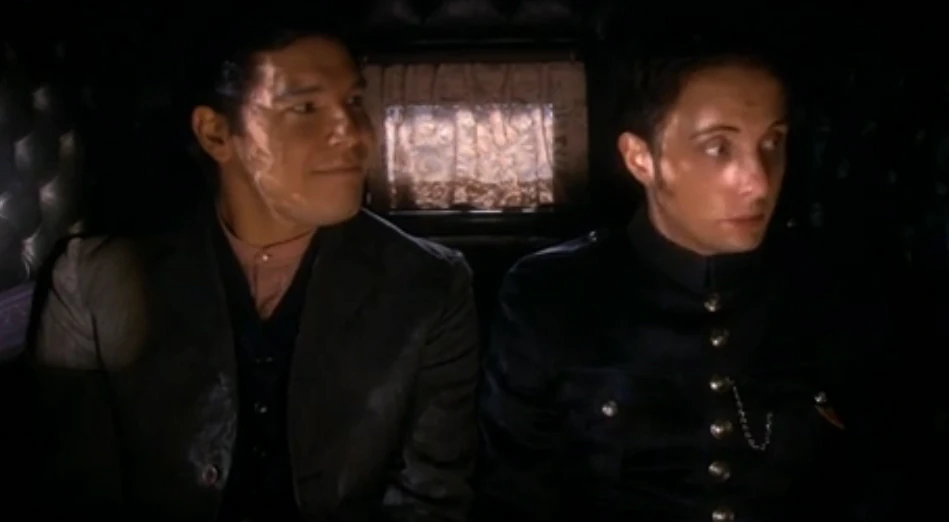

Through the narrative we learn this native character would like to become a policeman but is excluded due to his race. He says “I lived with my grandfather till age 10, then I got taken away to a residential school.... They tried to beat the Indian out of me at school. They should have beat the color off me too. It’ll be a long time before someone like me wears that uniform” (Aitken 2009). Even though he is sharp and better trained than some of the white officers, he is not allowed to be hired and is relegated to work in the stables. The subtle way the writer of this episode slipped in a commentary on the historically true, wide-spread beatings of natives in missionary run, government funded residential schools is a positive use of media that helps modern people contextualize the struggle to be native in a country that penalizes those of other faiths, or those who speak other languages.

As the mystery unravels, the coroner and detective find clues that the wolf is a man with a machine, instead of a beast or wendigo as suspected. A near victim confesses to the detective that he and the other victims accidentally shot their native guide and left him for dead during a hunting trip. “Our guide, an Indian, I don’t know his name… he didn’t exactly die, but he was going to” (Aitken 2009). This statement is a huge metaphor for the way that natives are often treated by media.  The accomplice to a shooting has de-humanized this guide due to his race, different language and customs. They do not know his tribe, probably didn’t ask his name and didn’t consider notifying the family of his accident. Instead they abandon a dying man cruelly in the lonely forest, without remorse. They assume he has expired, become extinct. However, the native guide did not die and has come to the city to take vengeance on the hunting party one by one.

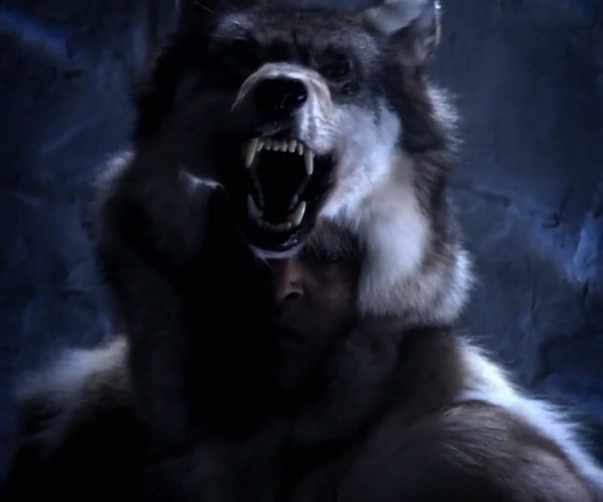
They learn the native guide who survived being shot was once a well-respected medicine man, who was later forced by colonialism to be employed as a hunting guide for graceless racists who almost murdered him. “He might be a shaman, we had one in our village and when he danced he wore the head and skin of a wolf… Missionaries put an end to the shamans, now we have doctors and good lord Jesus” (Aitken 2009), says Jimmy before he tracks the killer to the sewer tunnels. The police find the murder weapon, a bear trap like device affixed with machined wolf teeth. The killer runs headlong into the group dressed in the shamanic disguise of the wolf. He ignores commands spoken in English and is shot down by the Inspector.

The dying man tells his true name to Jimmy in his native tongue. When Murdoch asks what he said, Jimmy tells them the man’s name was Wolf and he was of the Chippewa tribe. This simple statement honors the humanity of the native, giving him a name and region instead of simply objectifying his character as a minority token character.

At the end of the show, it is summarized that the killer shaman’s “wolf motif allowed him to reclaim his identity and terrify his enemies” (Aitken 2009). This romanticized use of the avenginff mystical warrior character makes for exciting stories but it can be an impossibly high bar for native youth looking for role models to relate to.

Inaccurate and negative media depictions have psychological consequences. For example, exposure to common media portrayals has been shown to have a harmful impact on Native American high school students’ feelings about themselves, their community and their academic possibilities… Media depictions of Native Americans can influence how Native people see themselves. Some may be motivated to identify with representations, even if they are inaccurate” (Leavitt 2015) Imagine growing up in an era when everyone played cowboys and indians, only you can’t take off your racial profile like a costume and you always get chosen to identify as the indian in a story where the hero of the trope is predetermined by the formulaic stories, made popular in your society by movies and television shows. If you are a native kid, “does that mean you are just gonna lose every time?” (Reel Injun 2009). This negative impact on the self-esteem of natives has serious implications for our society.

Although occupied by foreign oppressors, native people are not extinct in North America. It is not too late for media to evolve and offer better roles for native actors in modern contexts. “We ought to challenge the media and treat Aboriginal culture as something that is continually evolving like our western culture, rather than a dead way of life” (Garetto 2013).

In development of new media, perhaps we can undo some of the damage done by media created during older eras. As content creators we must tell stories that show natives are human beings, included in storylines as modern regular people. Let reality inform your storylines and utilize native voices. Media can improve its track record by “disseminating more information about the Aboriginal reality, improving the training of communicators, involving Aboriginals in change processes, and using international media to affect local affairs” (Common Portrayals of Aboriginal People n.d.). 

If instead we “assume that … the constructed notion of Aboriginalism (where) Aboriginal people are portrayed as primitive and exotic, is in fact truth. The identity of Aboriginal people will become a thing of the past.Indigenous culture is still evolving and will continue to evolve in the future, whether or not we choose to embrace this change and encourage it will depend on whether or not we are prepared to challenge the way the media represents individuals” (Garetto 2013).

WORKS CITED

Aitken, Paul. "Werewolves." Murdoch Mysteries (S2 E12). Citytv. Toronto, Canada, 20 May 2009. Netflix. Web. 30 Nov. 2016.

Berger, Arthur Asa. Media Analysis Techniques. 5th ed. Thousand Oaks: Sage Publications, 2014. Print.

"Common Portrayals of Aboriginal People." Media Smarts. Canada’s Centre for Digital and Media Literacy, n.d. Web. 01 Dec. 2016. <http://mediasmarts.ca/diversity-media/aboriginal-people/common-portrayals-aboriginal-people>

Garetto, Joanna. "How TV Makes Us Think All Indigenous People Are the Same." Larrikin Post. N.p., 25 Aug. 2013. Web. 01 Dec. 2016. 
 
                                                                                                                           
Qureshi, Farah. "Native Americans: Negative Impacts of Media Portrayals, Stereotypes." Journalist's Resource. Harvard Kennedy School's Shorenstein Center, 10 Feb. 2016. Web. 01 Dec. 2016. <http://journalistsresource.org/studies/society/race-society/native-americans-media-stereotype-redskins>

Reel Injun. Dir. Neil Diamond. By Catherine Bainbridge. Rezolution Pictures / National Film Board of Canada, 2009. Film. Netflix. Web. 05 Dec. 2016.


Sydner, Ritch. "Last Thursday in November." Roseanne, Collection (E22). ABC. Los Angeles, CA, 21 Nov. 1995. Netflix. Web. 24 Nov. 2016.

30 October 2016

Freudian Defense Mechanisms seen in 3rd Rock from the Sun


3rd Rock from the Sun is a program about a group of four, genderless aliens that land on Earth and pretend to be a human family in order to study us. Dick is the High Commander and leader of the aliens, but on Earth he acts as patriarch and college professor. Sally is the Security Officer, but her assignment is to learn about Earthling females. Tommy’s role on Earth is as a typical American teenager, even though he is the oldest of the aliens. Harry is a joyful simpleton, kind but not book smart. His role on the aliens’ mission is to act as a critical communication device with their home planet and superiors.  The premise of the television show is that the aliens do not want their true identities revealed to the humans. The aliens regularly employ a slew of Freudian defense mechanisms to prevent being found out, or maybe just to protect their fragile, newly human egos.
The team all represents different aspects of Freudian ideas. Dick is the most phallic, as he is self-centered, competitive, envious and narcissistic. He rationalizes all his dominating, pushy, bad behavior as justified because he is the commander. At school, he rationalizes that his genius makes him intellectually superior to the other staff members and professors (in his alien mind, they are lesser human beings).  Dick believes he is the superego, the authority on everything. However, his frequent lack of knowledge and denial that he doesn’t know everything makes him a pretty inept leader.  Although he believes his is ruled by the conscious, in actuality he is ruled by his impulsive id. In this episode, “Will Work for Dick” (Goetsch 1997), he can’t even run a copy machine, and the inanimate object is immune to his demands, emotional outbursts, and beatings with a messy toner cartridge.


These aliens do not have human memories of childhood, as they are recent arrivals to this planet.  They are inspired by the childhood stories the humans, Mary and Nina reminisce about. Mary says she was fixated on identifying as Cinderella as a child. The ladies tell Sally stories of how impressed and fixated their fathers were on them during recitals. Sally is very competitive and desires to attract the attention of her “father” as well.


When a little human girl Sally is babysitting wants to play tea party, the aliens are ambivalent and baffled by her imaginary games. The girl is almost all id, playing fantasy games as kids will do before the ego is fully formed. Sally decides learning about human childhood for females during early stages of personality development is essential to her alien mission. Tommy & Sally try to play childlike games throughout the episode. This mirrors the genitally minded psychology of their human characters, who are often portrayed as overly hormonal, much like insecure, experimenting, junior high kids. The pair are frequently entangled with romantic discoveries on their mission in other episodes, however this time they have regressed into behaving as younger “children” for their investigations.  Sally plays dress-up with Tommy in female clothing, a frequent gender exploration for young, human children. When the two play with dolls, there is a little reaction formation as “Barbie” and “Ken” argue about gender wage inequality. Sally continues to regress into childhood hobbies, wants to identify as a princess or ballerina and asks Dick for permission to take ballet lessons. She begs for his approval, which is symbolic for the child who pleads for the attention and approval of the parent; this is an ongoing theme in both this episode and in Freudian literature.


 Harry’s character provides another instance of Freud’s structural hypothesis. Harry operates on instinct, following the whims of his subconscious id. He exhibits both oral tendencies throughout the seasons of this show, but in this episode it is just shown as the bit of salt he snatches into his mouth. Freud may have seen it as anal when Harry uses tweezers to try to refill a salt shaker, too OCD to ask for help or clues on how to do it properly.  Harry gets things done, even if in ridiculous, alien ways. However, Harry has no experience as an office worker and is asked by Dick to come work for him at the college. Harry strongly wants to please the father figure, Dick, and immediately tries to identify as an office assistant.

Dick lost his previous assistant, Nina as a result of reaction formation. The boss and employee had “opposing attitudes (that) generates problems” (Berger 2014). Dick has a bad attitude about Nina’s role as his helper and would prefer more submissive behavior. She feels he is unrealistic about what employees are supposed to do for their boss, and is ambivalent to his frustration about his desire to catch up after he spent 2 days not working. She chooses to go on a blind date instead of doing Dick’s last minute requests and prefers to quit rather than be berated by him. As High Commander, Dick is not used to outright denial or avoidance of his orders and isn’t sure how to handle this as a human employer. He suppresses his need to apologize to her and attempts to replace her. He rationalizes she’ll “never work in this town again” (Goetsch 1997). However, Nina rationalizes she was only hired to work for Professor Mary who is easier to work for and less demanding than Dick.

This is why Harry is brought in as Dick’s untrained assistant. Dick rationalizes, “Working for me is a reason to live!” Harry is told to repress all his own desires and make his job his life, and “desk (his) girlfriend” (Goetsch 1997). Dick uses a stopwatch to time all Harry’s tasks. Nina tells Harry to respect himself and have limits on what orders he will take from Dick.  She shows him how to tell his boss to “talk to the hand” as a signal of physical avoidance of tasks. Later, Dick denies losing Nina is effecting his productivity, even though Harry isn’t up to the job.


 At first, Harry denies he is being treated unfairly. Harry pretends his first day on the job was “the greatest day of my life,” suppressing that he really hated work. Finally, Harry quits but Dick is in complete denial of his lack of control in the situation and replies “You can’t quit, you’re fired” (Goetsch 1997).  Dick denies it is impossible to both do his own job and that of his assistant, and he even tries to make his own copies. He denies his own responsibility for running off Nina until he destroys the copy machine and gets covered in inky, toner cartridge powder.  Dick goes to Nina’s apartment to apologize and begs her to come back. He is ambivalent to the black mess he leaves on her all white rug, furniture and clothing. This is a metaphor of how Dick is frequently ambivalent to how his actions effect those around him. He had been fixated on how Nina helped him instead of respecting her needs as a human. Nina herself, was at first more fixated on the stains than his apology, but later takes pity and agrees to help him at work.

Sally is excited about everything she is learning through ballet lessons. She proudly tells her “father” Dick that her teacher said she dances like a drunk bear. She shows off her plié and he responds that it was a good investment of his money… for “squats.” Sally rationalizes that her pliés are “French squats” but seems frustrated that they are not good enough to merit his genuine approval (Goetsch 1997). After being reminded several times about the ballet recital, Dick misses it due to his copier tantrum.  Sally is ridiculed by the other dancers.  When she tells the guys that she feels betrayed and disappointed in Dick’s absence, “Harry and Tommy congratulate her on experiencing the neglect and rejection of a normal childhood, and Harry informs her that ‘if you ever flip out and kill a guy, you can blame it on Dick’” (TvTropes 2004). They suggest classic Freudian projection as how human children respond to the failings of their parents. Tommy, the alien with the most exposure to human children, tells Sally she is “damaged for life” and that her future problems can be attributed to “bad parenting.” Tommy says, “take all this emotional baggage and let it feed your adult neuroses” (Goetsch 1997).


If Sally projects guilt onto her parent for all of her future anxieties or sins, then she is in denial about taking responsibility for her actions which is necessary for learning from her mistakes. Wasting too much time repeating defense mechanisms slows down the introspection necessary for personal growth. This is the paradox of Freudian justifications, at some point we have to stop making excuses and give up dragging around the weight of our past. Brushing off past damage as best we can, learning what lessons we can from them, then focusing on the future. By using our current energy to pull ourselves up by our bootstraps, we humans can move forward to a healthier, more successful future.

WORKS CITED

Berger, Arthur Asa. Media Analysis Techniques. 5th ed. Thousand Oaks: Sage Publications, 2014. Print.

Goetsch, Dave. "Will Work for Dick." 3rd Rock from the Sun, season 2 episode 22. CBS, Los Angeles, California, 4 May 1997. Netflix. Web. 15 Oct. 2016.

"Live-Action TV / Freudian Excuse - TV Tropes." TV Tropes. N.p., 2004. Web. 23 Oct. 2016. http://tvtropes.org/pmwiki/pmwiki.php/FreudianExcuse/LiveActionTV


03 October 2016

Marxist Critical Essay of Twilight Zone S3E01 "Two"


What is the cost of class conflict? How much are we willing to lose before we stop following ideologies that pit man against man, destroying society’s means of production, and leaving cities in ruin? The true cost of war’s false consciousness is a loss of empathy for others. Without empathy for others, humanity could destroy itself.

This is the message encoded into the classic Twilight Zone episode, called “Two” starring Charles Bronson (as seen in action movies like “Death Wish” or “The Magnificent Seven”) and Elizabeth Montgomery (who starred on the sitcom “Bewitched”). Producer Rod Serling’s sci-fi program this time takes us to a future world, where warring nations have destroyed much and it doesn’t seem anyone has survived the evacuation, occupation, fallout, or whatever happened before the start of the episode that left the landscape in such desolation. As the episode opens, she scavenges a long empty town for food.  Soon, we are introduced to him in his very different uniform from hers and the two clash violently as they have been trained and indoctrinated to do.  We find only two unnamed survivors seem to remain alive in this post-apocalyptic future, but they are soldiers from opposing sides who fight instead of cooperate. The conflict of these “two” is a metaphoric microcosm representative of any two warring powers or their representatives.

In this episode, we find evidence of a consumer society lying in ruins as the couple are seen in the remains of a once thriving city that was evacuated over 5 years before, in response to the invasion of enemy troops.  While alone she admires a pretty dress in the shop window, impractical for war, an aesthetic of another time. She is dirty and her uniform is inspired by Eastern European military attire from the Cold War era. She carries a rifle and several weapons like knives.  She is vigilant and a survivor.


In this society, false consciousness about knowing your enemy by the uniform they wear is a key tool for survival and for murdering in the name of the leader’s ideology. Nation boundaries keep rulers in power and language barriers sometimes limit economic possibilities. In truth, we are all humans who need shelter, food and love.  But these soldiers have been forcefed their nation’s doctrines. 

These two lonely souls meet in a restaurant kitchen, battle and she gets knocked out. He is war weary and after taking the food and leaving, he feels pangs of empathy and returns to share his meal and wakes her up. She is doctrinaire at first and refuses his aid, because she believes him to be the enemy due to his rebel uniform and language. He has begun to question the doctrine of his now absent leaders and a society that destroyed itself.


The us versus them hegemony tells them they cannot be friendly with the wrong side or cooperate to rebuild.  Inflexible ideas like only wearing your uniform and killing on command are rules specific to their society.  They have alienated themselves from their fellow man due to this false hegemony. But these paradigms begin to shift for them as the episode continues.  The war has alienated these two from not only the influence of their leaders, but from the rest of humanity as well it seems.

The old world’s class conflicts and warring nations only benefit the bourgeois leaders and leave the proletariat soldiers to clean up their messes or try to survive on what’s left. The fading materialism remains with the city, but there are no new products. The modes of production are unmanned and under-supplied. Class conflicts of invader versus locals, with clashing languages and uniforms eventually grind away the fat of materialism and the only valid conflict that remains in the mind of these “two” is dirty war versus a clean shaved peace.

The woman suspiciously follows the man as he enters a dusty barbershop. He tells her there is “no longer any reason to fight, no longer any armies, boundaries or noble causes” (Pittman 1961). Our bourgeois hero has proven egalitarian by sharing his food but he is still rejecting authority and selling individualism. He encourages capitalist ideologies like peaceful exchanges, normalcy, rebuilding and consumption. He is shown consuming food and seeking unique clothing, to distinguish himself as an individual no longer in the uniform of the masses. He becomes a “transformer of society” (Berger 2014).

Their old society was led by hierarchical elitists, but with the leaders absent, individuals begin to lead themselves. She plays the fatalist and ideologist who sees no evil, to his utopian who sees no good with the status quo we find them in. The leaders’ resources have been cut off in this desolate, post-apocalyptic landscape. These two lone survivors lack food and electricity. The hegemony of the leaders destroyed the old world, their propaganda polluting the empathy of their people for anyone not like them.  This leaves the rebuilding up to the proletariats and who they choose to collaborate with.


The leader’s ideology of blindly killing and destroying based on orders and to suspend empathy for other humans in the name of war poses was a serious risk with devastating consequences. The producer of the Twilight Zone, Rod Serling, was a veteran of WWII, where he “was intimately acquainted with the horrors of America’s attempt to reclaim its Pacific colonies…. Serling's best friend… was decapitated in front of the future screenwriter by a ‘biscuit bomb,’ a food crate intended to nourish the life of the man it killed. Serling closed out the war living in the horror of occupied Japan where the American treatment of women, children, and the elderly contributed to the nightmares that plagued the author for the rest of his life. The towns that were not obliterated by the atomic bombs, or burned by American’s firebombing raids, were deeply scarred by famine. The U.S. naval blockade around Japan in the waning days of World War 2 was actually called Operation Starvation” (Goldstein 2014). With the producer’s background in mind, it become harder to suspend disbelief that this fiction could not prove prophetic. This episode acts as a warning to the viewer about a future that is not dissimilar from our military’s own past.


Our two main characters, a man and woman from different sides take a chance on empathy and clean up together at a barber shop. He encourages her to put on the pretty dress she had admired from afar earlier, and gets it out for her.  He encourages consumption of civilian attire as a symbolic rejection of the military industrial complex’s forced uniformity and ideological doctrines. He gives her the dress like extending the olive branch from one army to another as a sign of disarmament and peace, gruffly but with good intentions.

She goes into a building to change, then notices propaganda posters lining the wall of what once was a military recruiting office for a war against her home people. She becomes enraged at a propaganda poster, enflamed she tries to fit everything into her doctrine. She sets aside the dress and grabs her laser gun. She is doctrinaire and resumes the futile power struggle by running outside where the man awaits her, and she instantly shoots at him. He escapes her attack. She spends time alone, she returns to the barbershop seeking shelter from a storm. Perhaps there she begins to question the hegemony that said she was safer alone than with someone who didn’t share her country’s ideology.


In the last scene, he has changed into civilian clothes. He puts on a sports jacket and fun scarf around his neck. He will need his rifle to hunt food and has found a couple of mason jar canned peaches. His prospects are grim, but he has taken an optimistic, make-do attitude. He sees her approaching and recoils, yelling, “Go take your war to more suitable companions, this is civilian territory” (Pittman 1961). In this statement, he confirms that he feels this war is no longer his. The irony that there are no other companions for her to take the war to, is as evident as their isolation.

She pops out into the open and has put on the civilian dress. Her hair has been pinned up and she has cleaned the toil of war away.  He recognizes this as a symbolic gesture and they walk off into an unknown future as a pair, perhaps to rebuild and cooperate.  By rejecting the old world hegemony that caused destruction and giving into empathizing with each other, the two survivors provide a hopeful chance at rebuilding a new world together.


WORKS CITED

Berger, A. A. (2014). Media Analysis Techniques (5th ed.). Los Angeles, CA: Sage Publications.

Goldstein, R. (2014, November 13). How a War-Weary Vet Created ‘The Twilight Zone’. Retrieved October 02, 2016, from http://www.thedailybeast.com/articles/2014/11/13/how-a-war-weary-vet-created-the-twilight-zone.html


Pittman, M. (Writer), & Serling, R. (Producer). (1961, September 15). Two [Television series episode]. In Twilight Zone. Culver City, CA: CBS.

Semiotic Critical Essay of Rick & Morty


The Heroes' Journey - "Close Rick-counters of the Rick Kind"

The message encoded into this cartoon teaches us about overcoming objectification through the recognition of one's own self-worth.  This semiotic analysis will show how this episode (S01E10) of "Rick and Morty" uses signifiers, metaphors, icons, indexes, metonymy and symbols to add meaning and cultural significance to the viewing for the audience.  By looking at intertextual references and plot structure cues, we recognize more of the deeper connotated meaning than what is merely denoted on the surface. The episode's syntagmatic sequence mirrors the classic hero's journey and can be traced using Propp's 31 elements of fairy tales.  This show adds a twist to the formula in that the hero is not who you would expect.

The title of this episode refers to the movie "Close Encounters of the Third Kind" (Spielberg 1977), yet very little of the new show matches the old story. In theory, the father character who leaves with aliens on a spaceship at the end of that movie could share the same reasons that caused Rick’s character to be away from his family so long during his daughter’s childhood (The birthday candle in his pancakes symbolize Rick's 1 year anniversary of living with his family). The old movie might be this tv show’s prequel. This show also uses a sample from the themesong for the BBC sci-fi classic, “Dr. Who” (Grainer, 1963); also appropriate considering Rick’s love for space/time travel.

The episode’s initial situation begins with a family breakfast on the anniversary of Grandpa Rick's move-in and return to Earth.  His daughter, Beth promises to make pancakes in shape of space ships (round). The family home’s breakfast table metaphorically represents normalcy, refuge, something to protect and return to.


With intense music signifying drama, the pair are kidnapped from breakfast and home. Rick and Morty are taken at gunpoint to see the “Council of Ricks,” a group of authoritarian Ricks that are his doppelgangers in other dimensional timelines. Rick is accused of crime and taken away during the interdiction. More dramatic music is heard and an expansive space background is shown to create a sense of size and distance for their journey's first destination. The Council of Ricks’ large facility is an iconic testament to Rick's intelligence.

Morty discovers that his counterparts in other timelines all typically pair up with Ricks. The interdiction is violated when Rick confesses that his genius brainwaves can be tracked by other Ricks, but being near Morty's less intelligent brainwaves act as a camouflage to hide Rick. Morty feels that the relationship isn’t special to Rick.

At the council, “lack is made known and the hero is approached with a request or command” (Berger 22). Morty's Grandfather is accused of multiple murders, which will take both of them away from the family home. The camera does a top down close-up on Rick as he protests his innocence. Then a wide shot focuses on the intimidating judges who convict him to the tune of dramatic music. Symbols include the “Rick Emblem” on Council doors and pins worn by council members.


Council delivers information to a group of Ricks (including possible agents of the villain) about the murders and shows crime scene photos. Council attempt reconnaissance, scan Rick’s portal gun history, find falsified proof that Rick has traveled to the scenes of the crime, and convict him.  Rick's is sentenced to a torture machine, but he and Morty escape through multiple portals and are pursued. The “fart planet” the pair run through is a visual reference to art by Terry Gilliam that was shown on “Monty Python” (Evans, "The Animations of Terry Gilliam."). These portals are an index for a Means of Escape, a way to separate self from group assimilation. These multiple portals being used as escape routes confuse those in pursuit. These portals act as a metaphor for their escape being a result of free will, and independent choice (instead of predictive fate).


The pair is dispatched on difficult task by Council to find true culprit. Rick rescues Morty at Council, but then confesses he needs Morty to act as a “human shield.” Rick lacks proof of innocence, desires to find real culprit. Morty shows a lacks awareness at first of his own self-worth. Rick decides they must clear his name.

Morty chooses to go with Rick and they escape in the counteraction. The heroes are pursued by Council Ricks. Morty discovers the real villain is not the Council of Ricks but the culprit of the murders, Evil Rick. The villain attempts to hide behind a matrix of Mortys, whose pain creates a barrier to detection by authorities. The difficult task for the pair is not just clearing Rick’s name but trying to rescue all the Morty's from torture and bondage. Rick continues to make objectifying quips that hurt Morty’s feelings. A close-up shot on Morty's eyes as they well up with tears adds emotional intimacy with the viewers as he argues about his self-worth as more than an object. This cinematography signifies that the viewers relate to his emotional suffering.

The inside of evil Rick's lair is shown in dark, moldy colors with sinister music to signify villainy. Overgrowth seen in basement is tentacle-like to create a sense of foreboding and danger. The heroes have been guided to the object of their search, and Rick and Morty sneak into the lair of Evil Rick, a hideout worthy of a James Bond villain. During a fight scene with H.R Geiger-like alien, bug creatures (Giger, H. R. "HR Giger - The Official Website."), the camera pans and zooms to signify action for the viewers. The villain's lair is a metaphor for the concept of "one man as an island" and lacking any outside perspective, Evil Rick has become corrupt. Evil Rick quickly captures Rick and tricks him with a creature that appears to laugh at all his jokes. Evil Rick wears a symbolic black t-shirt and has a facial scar to give him physical ugliness to match his villainous acts.


Morty departs and leaves Rick's side after an argument about his objectification. Morty questions his relationship with Rick as possibly deceitful, and he questions his value to his grandfather. Indignation causes him to walk away from his Rick with Evil Morty, whom he thinks is his counterpart and comrade. Evil Morty tricks Morty into complicitly walking into prison. "Come with me" is all it takes for Morty to unwittingly comply with his enemy (Berger 21).  

The villain who killed off other Ricks, shows off his reconnaissance data where he’s "cataloged" of all Ricks on a good-evil spectrum. Evil Rick tries to compare himself to Rick paradigmatically, “we are not so different.” Heartwarming music plays as Evil Rick shows Rick memories of his Morty. Rick cries as he sees Morty as human (which is ridiculed by Evil Rick who objectifies all Mortys).


Morty’s heroism is tested by imprisonment which prepares the way for him to meet a cult-like helper who donates a magical object that leads to his epiphany. Morty tries to escape, beating on doors, where he meets Cult Marty who gives him a tract that reveals his true calling. The donor aka Cult Morty does not try to escape at first but is resigned to his fate. He hears of the "One true Morty" from a Donor who gives him a tract. The religious comic given to Morty in prison shows intextuality as a visual reference to Jack Chick’s evangelical tracts ("Jack T. Chick." Wikipedia).


In this gift, Morty’s given a magic transformation by recognizing his value as an individual with free will (not an object). He becomes the true hero of the story, branded as the "one true Morty." Morty reacts to the gift and now is self-aware. Morty transforms when he realizes his free will and gives a speech that brings the Mortys to revolt. He is raised over their heads after he stands on the soapbox. He is elevated metaphorically and literally in this scene. Mortys hoisting the “One True Morty” up after his speech indicates their acceptance of him in the hero’s role.


Inspiring music plays as Morty gives the speech. Close-up crowd shots signify its emotional impact. The soapbox that Morty stands on is an index for Morty's transformation into hero. The camera angle on Morty speaking is from below, making him seem larger than life and the other Mortys. The jailed Mortys represent a sense of repression by being confined by the opinions and will of others. The synecdoche of the story is the “One True Morty,” which alludes to the existentialist first person point of view. His perspective of self is a catalyst for heroic action.


He says, "We are Mortys and are not defined by our relationship with Ricks. Our destiny is our own." This rejection of objectification empowers the other Mortys into rebellion and choose to act as their own saviors. Morty is the hero because he teaches the Cult of Morty the value of free will and self-awareness. The Mortys compare their current objectified life as prisoners and human shields, to one of free will "gardener or writer of intense action novels." Even Hammer Morty declares he is "more than a hammer," more than an object (Ridley, 2014).


The Cult of Morty escapes prison and attacks Evil Rick in direct combat, becoming their own saviors. The villain is defeated and punished, as the freed Mortys rebel against captivity and choose to kill Evil Rick after being inspired by the hero. The hero returns, as the One True Morty releases Rick. We find that Rick is not the hero at all when he is rescued by Morty, who is no longer the "helper" but revealed as the true hero of the episode.


Rick deactivates the Morty Matrix cloaking device and releases the tortured Mortys, ending part of Morty’s initial misfortune. Proof of Rick’s innocence is given to Council who no longer lack evidence. The task resolved, Rick calls home to tell the Council Ricks who have been staying with his family to come pick up the real killer.


Morty arrives at the council unrecognized as the true hero. Rick is seen by the council as victorious.  The council apologizes and the false hero Rick does not reveal that Morty is the one who defeated the villain. Later, Morty is grudgingly recognized as the hero by Rick, who does it privately to avoid being exposed as a false hero. He calls him "The Mortyest Morty," the most individual and unique of the Mortys. This branding is pragmatic to his other hero name, “the one true Morty.” Earth Rick C-137 and Morty have been reunited. Council apologizes. The pair finally get to eat their pancakes. This return can be seen as a metaphorical marriage or partnering that includes an “ascension to the throne” or a return to the breakfast table in this case (Berger 22).       

Yet at the end of the episode, Evil Morty’s trickery is revealed.  The viewer discovers he’s a puppetmaster, whose been remotely controlling Evil Rick with his eyepatch. Evil Morty’s eyepatch is an intertextual nod to the Bond villain in Thunderball (Young 1965). Evil Morty used his freedom of choice to become the master, instead of the servant helper role held by most Mortys. In Evil Morty’s attempts to hide his deception from the Council of Ricks, he turned his villainy on other versions of himself. This is a metaphor for self-loathing, an ambition at the sacrifice of true self.


Hero Morty’s individualism may have been influenced by his Rick’s decision to stand apart.  Rick's metaphoric refusal to join Council represents his choice to maintain free will and avoid assimilation. In this, he chooses his own value instead of being assigned value by the group.  Rick admits he lacks connection with others, but feels it is valid to be internally motivated and not seek approval of the "club."

At first, Morty compares himself to other Morty's. He questions his value and uniqueness (notices cowboy Morty, etc). He soon realized that Mortys have been objectified by the Council of Ricks as a commodity. Morty dolls, necklaces, and the voucher for a replacement Morty were all icons of this objectification. Rick even says, “(those are) not people... (but) Mortys" (Ridley 2014)


Morty protests being called an object and Rick replies, "it’s your choice to take that personally." How we perceive ourselves is more important than how others perceive (and try to objectify) us. They should not determine our self-worth or overly influence our preferences. This message appears to be coded throughout the episode. As explained by Doofus Rick, “(If it has) value to you & you like them, then that is all that matters” (Ridley 2014).


WORKS CITED

Berger, Arthur Asa. Media Analysis Techniques. 5th ed. Thousand Oaks: Sage Publications, 2014. Print.

Evans, Noell Wolfgram. "The Animations of Terry Gilliam." Digital Media F/X. Joe Tracey, 2008. Web. 11 Sept. 2016.

Giger, H. R. "HR Giger - The Official Website." HR Giger - The Official Website. Tom Ahlgrim, 2015. Web. 11 Sept. 2016.

Grainer, Ron. Perf. Delia Derbyshire. Doctor Who Theme. BBC Music, 1963. Audio Recording.

"Jack T. Chick." Wikipedia. Wikimedia Foundation, 30 Aug. 2016. Web. 11 Sept. 2016.

Ridley, Ryan. "Close Rick-counters of the Rick Kind." Rick and Morty, season 1 episode 10. Cartoon Network. TOON, Burbank, California, 7 Apr. 2014. Netflix/Hulu/Amazon. Web. 09 Sept. 2016.

Spielberg, Steven. Close Encounters of the Third Kind. Perf. Richard Dreyfuss and Teri Garr. Columbia Tri-Star Home Entertainment, 1977. Film.


Young, Terence. Thunderball. Perf. Sean Connery. MGM, 1965. Film.