12 January 2016

how my writing discipline evolved to influence my art and music

my daughter scolded me for not spending more time journaling. i told her i love to journal and had kept journals for years, even telling her there were a box of them for her to inherit one day. having never watched me journal, she did not believe this was something i did regularly (typically i do it in bed or while traveling). she advocated journaling as a form of therapy. so today's blog is super personal by request.

after my conversation with her, i thought about my writing process. lately, i write for school or for speaking engagements, still indulging in writing poetry & essays for pleasure. my daughter said this kind of writing didn't count as the therapeutic journaling she wants for me because it is all written for an audience. I suppose she never realized that the things I write for myself don't get shown to other people usually, because it has already reached its intended audience - the page.


writer in the bathtub - photo by teresa tsai
When I was a teenager, I spent at least an hour a day writing. Typing out things for the outside audience on a selectric typewriter. Scribbling furiously in my confessional journals with special pens with lovely ink. I sang in church growing up, often onstage. I was already writing for people other than myself before graduation. Winning a poetry contest by turning in the poem I thought that audience would like the best, pastoral couplets for rural judges. The poetry that I enjoyed writing more was reflective of my youthful mood. I sought out open mic poetry nights before I was old enough to drink. I hid out in the school library reading about Kerouac and find had to drive over an hour to find a bookstore that carried his work. Like Kerouac, I wanted to find other writers to spend time with and experience the bohemian lifestyle that appealed to me.

However, writing had already become a "job" by the time I was 15 or 16. Working for the school paper meant selling ads, typing and editing other people's work and negotiating topics with administrators and advisors. Senior year I was managing editor, but I spent weekends in the city seeing bands, art house movies and drinking coffee at midnight to hear other poets wail. Going to college, I immediately joined the paper as a copyeditor. My 2nd or 3rd article was edited in a way that gave it bias and I stopped writing for them. The public backlash of having an article misinterpreted with your byline on it as author was a powerful lesson.

I started carrying a notebook around in jr. high, even a spiral in my back pocket would do the trick. To this day, it is incredibly rare for me not to have ink and paper around. Even with the advent of the online cloud and devices, there are still times I really need the smell of ink on good paper.


In the last 20 years, I have made a deliberate move to writing online. Yahoo had Briefcase which was an early cloud server. This allowed me to store writing samples online or the first time. The typewriter got left behind and storing new work became print-outs of cloud based poetry and essays. I told myself that writing online instead of in my books would make me a more disciplined writer, since I could resume that hour a day writing structure I missed. With online writing, my employer wouldn't ask what my book was and it would be harder to lose. Stealing time from my workday during lunch, I would write poetry & letters to out of state friends. I still went to coffee houses; bookstore readings and writing workshops just to keep growing and meeting like-minded others.
 

Around then, I started a postcard mail art exchange with Aaron Barker before the millennium. He was a great accomplice for testing the limitations of the USPS because (like me) he was both writer and visual artist. Post office had no problem with massive stapling, oddball shapes/thickness/materials. However AKBarker won the game the day his graphic sexual images out graphic'd the last ones i tried to send through the mail & the post office put his in a plastic wrap where only the address showed through for the sake of decency (lol).
(The text on this handmade postcard from me to Aaron is an Iman quote)
"The way I was raised and
lived my life in Africa, I was never told I was beau-
tiful. Never. If anything, I thought of myself as aver-
age. The boys looked at my cousins and the girls
in our family more than me.
In my heart I was
vulnerable and had low self-esteem
about my
own beauty, but not about who I was as a person."
I suppose my writing started as very personal, solely confessional and evolved into different types of work for different audiences. I may have access to an endless well of love and creativity, but like all mortals I am limited in the time I have to produce work, to create.

PERFORMANCE ART and SPOKEN WORD

So the focus on journaling grew like tentacle vines into many different shapes. I had a toddler at home. I got/gave cool postcards in the mail & hopefully brought a smile to the mail carrier's face. My boyfriend at the time, Matthew curated art events like I did and made electronic music in our house. My dear friend Frank Topp was always down for spontaneous music making. Hours were spent at each other's house making beats & rhyming over them. Our friend Brian Roberts was a drummer and there is a rare old recording of my early poetry with just him doing percussion. Back then recordings were done on DAT tapes or 4 track recorders that had to be converted onto a cassette or cd. Music and art was a huge part of our everyday lives.


Being a writer kept me employed in office work that helped me feed my kid and was a lynchpin to getting my foot into several job interviews. After work, I wanted to create music. Lots of girls wanted to sing for music producers, but I was a poet who came with her own material. Most of the producers I worked with over the years were friends or introduced to me by a friend. Before my daughter was school aged, I did a lot of live performances. I performed with a Quartet a few times at Reid Robinsons' old Johnny Rocket Coffee Shop (the first internet cafe in dallas) that included an upright bass, kit drummer and synth guy who did all the keys and sound engineering stuff.


I would sing over dj sets around town, reading poetry over their beats & improvising rhymes at times to match the mood of the music. Lots of my friends played music and it was nice to be invited to join them live on the mic. A friend invited me to Hot Springs, Arkansas for a weekend and there at Maxine's Puzzle Bar I had a very new experience.


We were having a drink at the bar and the band was setting up gear for their performance. There were probably only 20 people in the entire place. Someone on stage said, "does someone want to talk on this mic so I can do soundcheck?" I laughed and jumped on board. I read one of my poems from memory and probably sang an old jazz number by Sarah Vaughn.  I bounced offstage, back to my seat at the bar and an older lady came up to me. She hands me a twenty and I said "what is this?"

She said, "This is my bar and I pay my talent." Then she pretty much walked off after I thanked her. I was astonished. In a lifetime of writing, that was the first time I was paid to perform. In church, in coffee houses, in nightclubs, in print - none of the proceeds had ever landed in my hand. It was just something I did as a natural extension of my writing process for fun and creative exercise. Writing has always been like breathing for me, something almost involuntary.


Things seemed to evolve soon after. Reid asked me to play a few gigs with one of his bands that usually included percussionist Domingo Leija and avante-garde visual artist & didgeridoo player Thor Johnson. If there was any income, Reid was very fair about it and I loved the artsy scene we usually played for.

Frank got us a weekly residency at a nightclub club called Eclipse Sol next door to the old Arcadia theatre. It was our 2 resident djs, Frank and my high school friend Matt Norman along with a wildcard dj that rotated every week. I sang over all of them and it was a great way to make music on monday and share my poetry. It also led me to meet some really interesting musicians and producers, however we were not paid anything but free drinks. Free drinks on a school night is not the best idea btw. So I learned about taking pre-performance naps and cutting myself off after a few drinks, just so I could function the next day at work.


During all this time, I still scribbled. I kept a journal in my car for red lights. I did "automatic writing" in the dark at concerts & movies that were especially inspiring (transcribing that stuff later is a beast lol).  I played surrealist writing games with friends. I cut up my own words and glued them back together. Frank used my recorded laugh on a track he did for Fair Park records called "Celestial Park." It was just a sample and I am not credited on the record, but I was super giddy to be recorded on vinyl and literally hopped 
around for a week.


So when I started making electronic music with others, it was a relief to most producers that I didn't mind being edited. Having effects put on your voice or having your poetry cut to pieces can be hard for some people, but as long as my content kept the same meaning I didn't mind and found it fun.

After a year at Eclipse Sol, I told Frank I needed a change. I started worrying about legacy stuff for my kid. What if I got hit by a car? How would she know why I had spent the time on the things I believed in? What would remain? What tangible thing could she hold in her hand? Having a residency on a Monday was taking its toll on me with a day job and a kid at home I'd rather be with. Our night was pretty popular and I had my first legit stalker who tried to follow me out to my car or just showed up waiting for me there. Dude kept showing up to the other events I threw as well, asking for autographs and eventually getting difficult enough that I had him thrown out of a couple of places for being too pushy/scary. 


I got into the habit during that period of introducing myself to the bouncer or security guard at any place I was supposed to play at the beginning to ask for an escort to my car after I did my thing. The guard would smirk if they hadn't seen me perform before. Post-performance after the energy exchange with the audience, the guards understood why i needed a friendly walk to my car afterwards. That part was manageable, but the balancing a day job with night gigs was getting to be too much though.

More importantly, my desire to create more concrete work became undeniable.


WORDS & RECORDINGS (aka LYRICS)

I had a stack of journals in a box moving everytime I did. I had taken the trouble to type out poems or print out lyrics so I could hold them in my hand like a security blanket. What good would a residency be to my daughter when she was old enough to understand why mommy wasn't home monday nights?


Again I realized everything boiled down to time management. We humans only have so many hours in a day. I decided if I could sacrifice 8 hours a month (2+ hours each monday). then what if I redirected that same amount of time in a more focused way? So I pulled out my calendar. I blocked off 4 hours on one saturday each month for MUSIC. I blocked off another 4 hours two weeks later that month for ART. so if nothing else, I could progress my art and music a little bit at a time each month and keep momentum. It worked remarkably well.


The writing was happening every day anyways in bits and pieces and sometimes long luxurious writing sessions in my pajamas. But focusing the time, gave me permission to hide out and work every other saturday on something that fed my soul. The day job fed my body, the moonlighting fed my soul.


On the year anniversary we announced I was giving up Eclipse Sol. A year later, I had my first release on vinyl. 


Patchen Preston was introduced to me by wonderful Frank. He is an amazingly talented but reluctant producer and sound engineer. My original poem "Unnaturalism" is about the beat poet Neal Cassady. Frank asked me to record it as lyrics in Patchen's closet in Deep Ellum, which may have been barricaded with a mattress as added sound proofing. Years later I met Patchen's dad, the photographer & filmmaker Jon Preston at a party and I mentioned I had made a song with his son. He replied "The one about Neal Cassady? its in my car right now! I love that one." I knew I liked him immediately, because he knew the song was about Cassady by hearing it; plus he knew who Cassady was at all. Frank made a great video for this track on vimeo that includes images of fire and flight.


http://vimeo.com/8098295 
https://soundcloud.com/hepkatmama/unaturalism


Around 2000 I met Sean Anderson, who used my voice and lyrics on two different releases of his. His stuff was more progressive tech house then. He was really open minded about the subject matter I read about. Our first release "Solid Foundations" was on Chicago based Guidance Records and I was featured on the track "Dim." The original poem was about dream assassins, mythical kabbalist monks who could travel into people's subconscious while they slept. The song version was edited by the producer to be more romantic. The new creation turned out lovely and was well received.

https://soundcloud.com/hepkatmama/dim-grey-gdr-126


Mike Constantino had played music at quite a few events I had curated over the years. One day Adam Pickrell took me to the studiospace Mike shared on Ross Avenue downtown with Paul Paredes and Arnold Velasco. Knowing Mike from before, we were glad to see each other and scheduled a few recording sessions that lead to the release.  Orly Angelo did much of the production on the first album "Getting in It", really calm and joyful. Orly has a great ear for music and very natural flow. Really enjoyed working with him.  Like I could play a few keys on the keyboard to let them understand the melody I was feeling after I heard their first drafts of the track and he would just instantly get it & incorporate it.  Great collaborator. They were very understanding of my single mommy status and let me bring my daughter with me. She was always super well behaved and would happily color and watch movies while we worked. I'd bring her a little bag with quiet activities to work with in the side office.

https://soundcloud.com/hepkatmama/getting-in-it-ross-street


In 2003, Patchen came by one of my dinner parties and he brought me a gift. He had remixed the original track we'd done and created something wholly different and pretty amazing. Instead of focusing on the driver in my poem, this edit focused on the bus Cassady drove in the book "electric kool-aid acid test" and did it in an progressive techy trippy electo way.


https://soundcloud.com/hepkatmama/further-field-trip-mix

Paul and Orly were frequently collaborating. Paul scheduled a few sessions with me as well, after I wrapped up with Orly and Mike's e.p. project "Getting In It". Scott Pace and Paul had a project called "Honest Cars" and I believe this was the first track we did together.


https://soundcloud.com/hepkatmama/cars


Sean's Guidance Record and Orly's Fair Park Record releases were the same year around 2003ish. "Getting In It" got a favorable review in the print music magazine "XLR8R." Both vinyl records were commercially released internationally although only a limited number were issued. I got an ASCAP membership, an advance from the record companies and in the contracts legally retain a percentage of the lyrical copyrights on all my commercial releases. 


"Aqua A-go-go" was the 2nd track I did with Sean Anderson was a collaboration with JD Northrup (who now works at Pixar, but still releases music in SF). This poem was about rain and is a favorite of a few househeads in the UK. This track was released on vinyl by Fair Park.https://soundcloud.com/hepkatmama/aqua-a-go-go-fpr-022 

Several of us went to Winter Music Conference (WMC) in Miami to perform. They would pay my hotel room if I could just get down there. I played three gigs while in town. I was supposed to play a fourth with Paul at Opium Gardens but his time was cut and so was I lol. I got to sing great live sets with Sean Anderson on the patio at Kent Hotel, and another with Frank Topp who was living there at the time. 


I borrowed a vehicle and split the driving duty and gas cost with my my sweet girlfriends Sacha, Heather Smurfette and evil soon to be x-boyfriend. Kim Collins was my sound engineer that week and heart guru, she pretty much saved my ass with her amazing gear skills. 

https://soundcloud.com/hepkatmama/balance


But even on the air mattress in the back of the suv on the way driving back to texas from miami, i was scribbling away writing new stuff in my journal. 

https://soundcloud.com/hepkatmama/surveillance-vocal-trip-hop


However, throughout this I had financially difficulties. My parents were never rich. I had to be resourceful for my kid's sake. Corporate work paid well and had the insurance benefits I needed, but they would usually figure out I was not one of them and it was downhill from there. I never mentioned my art and music endeavors at the dayjob. Muggles are not impressed and it just opens the door for them to assume all sorts of things. "So you are one of those creative types, eh!? Now I'm on to you, missy! I saw that made-for-tv-movie about the artist/writer/musician. Escandalo!" I just kept hoping I would find a job that could accept that I was a hard worker that went above and beyond to get things done well and not be so upset that I had creative interests outside of work.


https://soundcloud.com/hepkatmama/houdini-electric-slipknot-mix


Paul had bigger plans. He wanted to do an l.p. and go for a full album. Originally he wanted me and scottie (redeye) to collaborate on lyrics or to release something with both of us doing vocals on different tracks. That didn't work out. Scottie had a very full plate and we just couldn't come together on our schedules. So, I was asked to write lyrics for a concept album to go along the lines of "glamour and damage." I wrote 12 fictional poems along that theme. Paul wanted the vocal delivery to be aggressive and forceful for his electrohouse tracks. I listened to a lot of Iggy Pop and La Tigre during the period we were recording. Scottie asked to keep the title "glamour and damage" for a project he was working on with someone out of state (said he was having it tattooed on to his neck).https://soundcloud.com/hepkatmama/firecracker

So I relented and changed our l.p. project title to "smash and glam." several years later, paul asked me to revisit the tracks and reworked a lot of my lyrics with an editor named Adam Ulevitch who shares writing credits on everything he changed. Negotiating content with an editor is an interesting exercise to say the least. Knowing what parts are worth fighting over and being able to appreciate improvements that you didn't make. Its an emotional see-saw of egos and preferences, but that is how art manifests sometimes.

https://soundcloud.com/hepkatmama/heartbreaker-nyc-mix

WORDS as ART

So in addition to writing leading to music, it also led to art. I often incorporate my writing into my artwork as was also done by dada and fluxus artists. There is a series of 12 collages based on the poems written for Paul's "Smash & Glam" project. This series of artwork was shown at the Austin Museum of Art in ____ at their annual 5x7 invitational art exhibit and auction. Its interesting because you see the cut-ups style editing. I made art out of the written poems I had with me in the recording booths that got written on and edited from the original to turn it into "lyrics." These edits were sometimes necessitated to fit the song structure and beats. Sometimes they were topical edits negotiated between me and the producer. Often they were edits I discovered had occured when the producer was reworking the track (parts just end up cut and its part of the process). I had been edited in school as a writer, but getting your personal poetry edited into a more musical format by someone who is not a poet can be heart-wrenching. It can also be beautiful when it creates a new composition you had never thought of. The true power of collaboration requires sacrifice of both parties egos on some level.

I continued hosting independent curatorial projects called D.Verz events from 1998-2003. During periods of day job unemployment they were held monthly. I began hosting 12 hour music and art events on summer and winter solstice which continued sporadically after D.verz was set aside. I hosted my first event before my daughter was born in 1994 at a art house movie theater on Samuell at Grand Ave called the Major Theatre. The owners let me pick double features from their black and white reels and showed them at midnight if I agreed to promote them. I made xerox flyers and stapled them up around town. I was going to raves thrown by a group called Kind Family who was looking for a new venue. I told Clint I had a venue they could pursue on the condition that I never be asked to pay to get in and got a plus one guest. 


It was a mistake to have more people in that space than the occupancy allowed. There is a special "silver" chemical applied to movie screens that is destroyed when touched (science). Dancers put sweaty hands on screens ruining their use for viewing purposes and it is a deep regret to me as a film lover who still has a collection of 8mm celluloid. I was young and didn't know any better at the time. I asked the owner each week at the rave to come give me a 5 minute warning before he would screen one of my favorite Douglas Fairbanks Jr. silent films from 1916 about the hedonistic "Detective Coke Ennyday" (definitely not a role model).  It was during a viewing of this comedy short that my neighbor Reid Manderville (RIP) introduced me (his girl best friend) to his guy best friend, the other partner in Kind Family (Mike, my exhusband and father of my daughter). Mike wouldn't have anything to do with me at first because he was seven years older than me, but I pursued him and we organized some amazing events together bringing in Steve Lawler, Derrick Carter and Afrika Bambaataa to name a few. We also created a smart, beautiful, love child together. He and I had similar birthmarks on our opposing thighs, the shapes fit together like jigsaw pieces. 


I kept journaling and writing, but did not sing while I was with my husband for some reason. I didn't pick up a mic again till I was at a party in the studio of Kenny Withrow, guitarist for grammy winning Edie Brickell's old band. Matthew P. was singing and I brought him a martini from my porta-bar. He handed me the mic and I suddenly remembered, "ooooooh yeah I can sing."


https://soundcloud.com/hepkatmama/wait-for-it


I remember that lesson because I know now if I don't have a song in my heart, it probably means I have changing to do.


Writing and art often intertwine in my life. I began managing the Plush Gallery downtown, after bringing a D.verz Event to the space. Randall Garrett let us host weekly poetry open mics that I co-hosted with Shawn Richburg aka Mustafa al-Laylah. We read poetry, had musical interludes and played surrealist writing games like exquisite corpse. It was wonderful to give new writers a platform to share in public for the first time and wonderful to meet established writers as well.

Years later, I was part of an art noise collective of performance artists called Binary Sound Machine who played at several galleries around town like the MAC, Texas Theatre and the very first Aurora Art Festival at Old City Park. I got to play clarinet in public for the first time since high school band and read poems over the music.


Binary Sound Machine at first Aurora Event at Old City Park as part of the Cedars Open Studios Tour, photographed by Israel Denis


Val Curry (gearhead and knob twiddler) was a great creative friend who invited me to play with him, Mary Benedicto (keys, video synth), Robert David Reedy (flutes & percussion), Sam England (guitar and accordion) and several other rotating artist sound performance guests like Randall and Jeff Parrott. Binary Sound Machine was known for improvisational music and abstract video projection that often included a box of children's musical toys and percussion instruments that were passed out to the audience members so that they could interact and make the moment happen. It was a deliberate destruction of the 4th wall, well except the time we played  in Houston and there was a literal wall between us and the audience (see below) lol.


Binary Sound Machine at Box13 in Houston photo by Sam England
At a Binary Sound Machine show, we opened for the musically magical Charles Randall at Candlight Room around 7 years ago. His supporters included the hosts of Poets on X+ Opalina and Carlos Salas who also ran the Cliff Notes Bookstore in Oak Cliff next to Kessler Theatre. They invited me to their show at the MFA Gallery where I met Johnny Olsen and MH Clay who hosted the Mad Swirl monthly open mic poetry nights at Absinthe Lounge (where I'd already thrown several events with the Reality Abatement Bureau artist collective). 

I still try to read at Mad Swirl (now at The Overpass Nightclub in xpo park or found online) and Poets on X+ (now at Lucky Dog Books) as often as I can. Both are uncensored but still moderated and full of wonderfully talented poets and storytellers both young and old, all bringing their experiences and methods to share.  Sometimes with the right group of poets you get the energy of a pentecostal revival, only without the religion. I'm pretty happy with this crew of laid back, like-minded, hyperverbal writers and friends. No one there says "you talk too much," instead they hoot and holler like they are feeling it.


cosmic kismet trigger effect at ant colony gallery photo by scott wayne mcdaniel
at this point, really i try to manage my time wisely and build in opportunities for journaling, writing, but also making to-do lists which is an optimist thing indeed. my writing leads me to music and art opportunities. I still take the stage and read poetry at least once a month. It gives me encouragement to keep writing. It gives me feedback, which ranges from "gosh your work is more powerful when it is less confessional" to "thank you so much for being open like that. it made me feel ____" or "i like to write but i'm afraid to read it in person, now i feel like should just do it!" being offered hugs, seeing tears and knowing smiles are also an excellent physical responses to be given after sharing your work with others.

I write for myself primarily. There are film treatments, including a long form improvisations short that we filmed over a 3 day period with 3 cameras (super 8 and vhs-c). called 24/7-11 it follows a group of people in a van all the way around beltline stopping only at 7-11's and parks. ideally the film should be projected simultaneously on 3 projectors and shown in one room as an immersive environment. There is a lot of work to do digitizing this project for modern formats.

my body of work also includes researched essays, critical art reviews, and cookbook editing projects. I write unapologetically and often, without reason or need for excuse. I choose my topics because I love them. Sometimes those topics are super personal and other times I feel like someone out there could get a happy connection if I shared it with them. How often have I read something mind-blowing by an author where it changed my pov for the better?


William Blake, William Gibson, William Faulkner,
Anais Nin, Jim Morrison, Henry Miller, Oscar Wilde,
Noam Chomsky, Joseph Campbell, Karl Jung, carl sagan,
Kerouac, Burroughs, Ginsberg, Kesey, Castaneda, Don Miguel Ruiz,
kafka, hunter s. thompson, tom robbins, vonnegut, gaiman,
omar khayyam, kahlil gibran, lao tzu


visual art by suza kanon "for the love of faulkner" in the private collection of Christos and Lori Polemenakos

I have a love affair with physical media, both collecting and creating. As a kid i collected rare first editions. I got a 100 year old 4 volume set of kipling at a flea market which included jungle book and I was hooked. I bought my grandmother's 8mm projector and celluloid reels at age 12. mom brought home a typewriter when her office made the change to computers when i was in junior high and the writing just flowed from then. I had always been a scribbler in notebooks. Getting in trouble for making my script too fancy in 1st grade. Noticing I could copy anyone's handwriting in 4th grade led to an interest in calligraphy. Writing has always been second nature, something soothing. Writing happens for me every day in some form or another and I try to make the very most of each opportunity. Whether it is writing a note to my brother and arguing on the internet. Often those argument are cut and pasted into drafts for later essays in my blog to give me enough time to research and source what I have to say. Every so often I am invited to be the feature poet at an event or asked to record for music projects, it is delightful creative exercise. Even as i write essays for school, I tend to choose topics I have been researching and wanting to spend time to write out anyways.

suza at chinati in marfa. unaltered photo with no filter, taken by docent in 2005.
Flex your writing muscles, kids. try to write every day, make it a ritual part of your schedule. keep your kung fu strong. i believe in you. Don't just be a consumer of media, be a creator.

18 November 2015

DART Should Consider 24 hour Service

Less DUIs & benefit to local industries predicted with Extended Rail Hours.

DALLAS - What do Chicago, LA, New York and Berlin have in common? The trains in those cities operate 24 hours a day, to the benefit of the residents and local economy. Even London is going 24/7 in 2015. So why does a big city like Dallas stop running the trains around midnight?

Public transportation is a good thing for a city. Rail connects its residents with essential destinations and services, more safely than commuting in cars and with less pollution. European cities have less drunk driving deaths and DUI arrests, which is attributed to their use of rail. With this in mind, let’s consider keeping the train running later at night. The costs of additional operating hours would be offset by increased ridership by graveyard shifters. Adding subscription based wifi for commuters could add revenue to the system. Improved hours for rail service would benefit the citizens of Dallas economically, helping our city better compete with other major metropolitan areas in America.

Rail connects riders to services and benefits night shift workers, non-drivers like the disabled & elderly.

The DART trains only run from 5 am till around midnight, even on weekends and holidays. Several bus routes and the A-Train connecting DART to Denton do not even run on Sundays. This means that often Denton students who take the train to Dallas to see concerts have to leave long before midnight, before the trains stop running. Many of these students get DUIs since the train is no longer an alternative. The gap in rail service from Saturday night till 5am Monday morning does not make our city safer.

This late night system stoppage leaves many people stranded. DART uses this time to do maintenance on tracks and cars, and has crews clean the train inside. Other systems in Europe and New York circulate the trains in service to keep everything maintenanced on a schedule without missing a beat. The show must go on, and thousands of Dallas residents have jobs that “require late-night or early-morning schedules. Many U.S. factories run around the clock with three full shifts. Americans are staying up later and getting up earlier…. More than 10 million people in this country are up at 3 a.m., and 7 million of them are working,” said a report from 7-11 on its late night demographic. For the disabled and elderly who do not drive, DART rail provides convenient access to essential services.

This means that expanding the hour of rail service will tap into a huge number of riders, theoretically increasing revenue for DART.  However, the community safety benefits of public transit should also be discussed when considering the move to 24 hour service.

Studies show that rail transit is safer than car commuting in general. European cities with rail also report less drunk driving deaths.

Riding light rail is 30% safer than driving, based on the number of traffic fatalities per mile traveled in the US. Plus, people riding public transit are less likely to be victimized by crime than car drivers/passengers. It is true that users of both cars and trains experience crime, but they see it in different forms. Rail passengers may have a rare chance of property theft or assault, but car users frequently see more auto theft, road rage and vehicular assault.

MADD’s newsletter reported, “Europeans do have fewer alcohol-related traffic crashes, probably because they walk and take mass transit (such as the bus, train or subway) much more often than Americans.” In Texas, 1,338 drunk driving fatalities were reported in 2013 by NHTSA/FARS. Uber in partnership with Mothers Against Drunk Driving (MADD) estimates that every 52 minutes another person dies in a drunk driving crash. Uber also found that ride requests spiked in Pittsburgh after bars closed around 2am. Not only is riding rail safer than commuting during the day, but our city is safer when public transit options are available after bars close as a convenient alternative to dangerous drunk driving.

What type of riders are up at such a late hour? 7 million Americans are at work at 3am.

Honestly, the majority of the people who are awake late at night do so for work instead of play. Turns out these riders are often hard working people on the third shift who pay taxes and have careers in industries that help keep the city running like first responders and medical personnel to name a few. In fact, the parent corporation of 7-11 did the study quoted above and also listed some of the quite respectable careers with late shifts that would benefit from having extended hours for DART rail services.

Careers with night hours “range from police and firefighters, to hospital and manufacturing night-shift employees. They are parents with sick children and travelers who simply need a ride a back to their hotels. Factory workers, airport employees, office cleaning service crews, security guards, emergency hotline workers, people "on call", musicians, actors and other entertainers (are all graveyard shift careers).

We may be asleep, but they are not. They are earning their livelihood and need services through the night and (ways) to and from their place of work.” These extended hours will require a larger operation budget for DART but it will positively impact hard working people in need of a way around.

DART could increase revenue by adding subscription wifi and adding these 3rd shifters to rider counts.

DART can increase its revenues by both extending hours to include those 3rd shift workers, and by offering commuters subscription based wifi services. Offering wifi thoughout the rail system would increase safety by improving the ability to report crimes or suspicious activity. Berlin’s U-Bahn has mobile phone coverage throughout its tunnels. Seoul, Korea already offers underground wifi access to its passengers. Dallas could partner with a wifi equipment provider and recover the costs of improving the system in no time. With the size of the impact to our city, we have to consider budgeting for late night service.

Maybe a test run could be done on holidays, during monthly Friday Late Night events in the museums of the Arts District, and during the entire run of the State Fair; all which bring lots of new riders into the system. How many lives would be saved from drunk driving accidents if DART ran till 3 a.m. just on New Years Eve to see if it makes a difference statistically?

By running the trains later at night, it will make Dallas a safer place to live.

Over 103,000 riders take light rail in Dallas every weekday over 90 miles of track. The number of riders buying tickets would just increase if the hours were extended. By expanding hours we will make our city safer from drunk driving and give low income graveyard shifters a fair shake on the rails.


WORKS CITED:

https://en.wikipedia.org/wiki/Dallas_Area_Rapid_Transit
http://corp.7-eleven.com/corp/open-around-the-clock
usa.streetblog.org/2014/12/19/heres-how-much-safer-transit-is-compared-to-diving/
http://Responsibility.org/get-the-facts/state-map/?state=texas
http://www.madd.org/media-center/press-releases/2015/new-report-from-madd-uber.html?referrer=https://www.google.com/
www.madd.org/underage-drinking/the-power-of-parents/high-school-parents/highschool-toughquestions.html
https://newsroom.uber.com/wp-content/uploads/2015/01/UberMADD-Report.pdf
http://msummerfieldimages.com/wp-content/uploads/2012/08/US-TX-000049-Edit.jpg
https://dartdallas.files.wordpress.com/2015/07/cedars-station-lrt-dallas-skyline-3.jpg

03 November 2015

Banksy / Gaza Graffiti / Art Value / Property Ownership

“Stop and Search,” an Uncommissioned Exterior Wall Painting by Banksy

Figure 1: Jiminez, Rafael Rafa59. "Exterminio de Palestinos, Gheto de Gaza.” January 4, 2009. Exterior Installation on a West Gaza butcher shop in Bethlehem, Palestine. “Banksy” group on Flickr.com. Photograph. September 10, 2015.

At first glance, it looks like a child is frisking a soldier (see Fig. 1). This exterior figurative painting is by British artist, Banksy, and features a female child with braided pigtails wearing a pink dress and black mary-jane shoes. To her right, a stenciled automatic weapon appears to lean against a rough, gray, stone wall. This placement balances out the composition so the softly colored girl is given focus as the central figure, flanked by two darker colored images. The weapon appears to have been put aside from the action in the painting, disconnected from the girl and the detained soldier. This disconnection gives the weapon emphasis, as it sits unattended, unused and alone. This might be interpreted as a symbolic call for disarmament by the artist.
The unarmed girl is seen patting down a soldier to her left, giving the painting a sense of movement and the illusion of rhythm as the viewer imagines her tiny hands searching his uniform, questioning what the military powers have to hide in this region. The uniformed soldier has assumed the position to be frisked against the wall. The soldier’s uniform is colored army green, in striking contrast to the pastel color of the girl’s dress. He wears a helmet on his head and his uniform matches those worn by the local military force that patrols the West Bank warzone in the Middle East.
The soldier depicted would be a common cultural sight in the location the work was placed, contributing to an uncanny valley effect for viewers. As seen in the archival photo of the work above (see Fig. 1), the repetition is almost inherent to the location since the painted military subject matter is repeated every time an actual flesh and blood soldier walked by this site specific installation.
Banksy’s painted soldier was placed to blend in with the seemingly never ending pattern of uniforms moving around this area of the West Bank. This repetition of green soldiers both painted and real would create a sense of visual unity between the art object and the original environment that it was displayed in. The subjects would be familiar to the viewer when they came upon the artwork in their daily life, although the subject matter is satirical.
“Stop and Search” is painted in urban graffiti style, also referred to by collectors as an uncommissioned exterior wall painting (Corbett, “Galleries Defend…”). Banksy “cut a specific stencil or printed a wheatpaste that could only ‘work’ in that one location. The artist then risked arrest and considerable fines to make sure that all of us have the pleasure of seeing the work as we explore the locations where we live” (Schiller).
Banksy’s medium was at least four colors of spray paint/aerosol enamel, multiple layers of stencils per subject, and masking. He uses tightly painted black outlines to unify each subject into a highly defined visual element. However, the viewers’ attention is first captured by the pop of colors on the largest subjects in the paintings, the fragile pink of the child and fatigued green of the soldier.
After removal, the 2007 work on stone measures 83” x 63” and weighs over a ton (Okpaku). The front facing exterior surface features the painted side, which is covered by bullet scars. The backside of the harvested work reveals a portion of the tiled interior wall of the butcher shop that was chosen as the original installation site for the artwork’s placement (Corbett, “Galleries Defend…”). Banksy deliberately chose to create this work during a time of war, using a provocative subject matter and placing it publicly into a society known for destructive bombings, unrest and very few children standing up against the soldiers they often fear or grow up to become. The contrasting size and proportions of the child in a position of overpowering the soldier lends to the humorous interpretation of the subject matter. 
However, “the work, like most street art, is often placed on private property, and in the process, the artist ceases to own it. The fate of the work is left in the hands of others.” (Vartanian) This placement can be interpreted as an aesthetic gift to the locals, giving them a little beauty and humor on a piece of property neither they nor the artist own or have permission to decorate.
Therefore, it should not seem out of character for this artist chose such a challenging “canvas” in the West Bank for “Stop and Search.” Banksy is a reclusive street painter and conceptual artist from Britain thought to have been born in 1975. His work has been shown around the world including exhibits at respected cultural institutions such as the Tate Modern in 2003 and British Museum in 2005. (“Cave art hoax…”) However, this early work was not installed upon invitation and his work was removed after the “pranks” were discovered, archived digitally by the audience and subsequently publicized. These exhibits were appropriate introductions for Banksy into the high art world, considering the majority of his works are done on uncommissioned walls without the permission of the property’s owner.
“Almost unique to Banksy's street art however are the shrewd use of context… and humour that define graffiti in a historical sense. He is also distinct in his democratic vision, for example favouring the populist mass media as a means of communication rather than… his own niche demographic.” (Lazarides)

Figure 2: “Vartanian, Hrag. “Banksy. Stop and Search, 2007; stencil and spraypaint on stone taken from Bethlehem, West Bank; 83 in. x 63 in.” 2012. Installation view at CONTEXT Art Fair, Keszler Gallery with Bankrobber Gallery exhibit in Miami, Florida. Hyperallergic.com. December 14, 2012. Photograph. September 9, 2015.
II.
Market value and assessment of worth for an art object is determined by the following criteria: condition, subject matter, size, provenance, and recent sales history of the artist’s work. The size and subject matter of “Stop and Search” have already been discussed earlier in this essay.
Art dealers, Stephan Keszler of Keszler Gallery New York and Robin Barton of Bankrobber Gallery London, “tracked down the works (by Banksy), purchased them from the unidentified owners, shipped them to Israel and a fresco specialist in Britain to remove excess dirt” (Corbett, “Galleries Defend…”). Restoration took over three years but it created a stabilizing frame for the work in its present condition (see Fig. 2).
“According to Barton, the Palestinian owners excavated the works and had intended to sell them on eBay. Instead, they ended up abandoning them… in a stone mason’s yard (outside of public view) when they realized it would be too difficult to move the two-and-a-half-ton works across tightly monitored border controls” (Corbett, “Galleries Defend…”). According to this, Keszler rescued abandoned art from an uncertain future and gave it a new audience.
Keszler originally asked $450,000 for “Stop and Search” at his 2011 show in the Hamptons. During 2012 Miami show, he had raised the asking price to $650,000 saying “now that they’ve garnered so much attention… (they’ll) be worth more and more over the years,” (Corbett, “Keszler and Banksy”).  His statement is accurate. Artwork that has been the focus of published criticism and academic evaluation is known to experience an increase in the work’s value, adding credibility to its provenance claims. Provenance is increased with every photo of the artwork and critical review that is written about it.
Banksy’s 2013 residency in New York City led his fans on “daily scavenger hunts… in which people searched for the latest work or installation following clues or images on the artist’s website. Each new discovery would then be captured in still pictures or video, posted on social media, and tagged with the location so others could flock to it and document it themselves.” (Landes) New Yorkers were given a tour of their own city with Banksy acting as tour guide in absentia through the deliberate placement of his work.
“Street art is concerned with the function of the symbolic structures and systems embedded in the material locations where it exists. This is underscored by the networked dissemination of the medium’s digital documentation. (Okpaku) It seems exterior site specific installations are often transitory, as the outside world can be a dangerous place for the condition of artwork left out to weather the elements. Thanks to the heavy archiving of Banksy’s work by the public, there are still images online of work that no longer exists because it was destroyed or removed.
The few pieces that do survive," Keszler said via email, "represent a small but significant record of the artist's early output, and that in a world where our physical exposure to such works is restricted to staring at the myriad screens and gadgets that increasingly fill our lives, the ability to offer people the opportunity to get up close and personal to such a collection of genuine Banksy artworks in a sympathetic environment is something to be celebrated rather than criticized. To be able to walk freely around the monumental Stop + Search, exploring its bullet-scarred surfaces and tiled butcher-shop interior has been made possible only as a result of painstaking restoration (Corbett, “Galleries Defend…”) and overcoming the “challenges of removing them from their original sites. (Keszler) will pay for the cost of transporting them back to his galleries or other storage areas… when those fortunate enough to find and/or take his public works sought a place to sell them” (Landes). Sales history and provenance of these types of restoration efforts heavily impact the value that museums come up with for insurance purposes.
Condition definitely effects the value of artwork, especially after taking into account the cost of restorations and transport. Which begs the question, is it better to move the work or just leave it put? Street art by its very nature is an act of faith in the public trust. You place the work — most often illegally — in public, and you kiss it goodbye. A photo online is usually the only residue of most of the ephemeral work” (Vartanian). The canvas appears to be out of the control of the artist almost immediately due to the sites chosen.
If the canvas is not owned by the artist, then who owns the work? Legally, the property owner owns the art object or mural placed on their real estate. “Building owners tend to become irate when their doors go missing because of a stencil….” Keszler said, “Banksy needs to either cease painting on other people’s private property or at least let the fate of those works be decided by their legal owners” (Corbett, “Keszler and Banksy”).
This means a mural artist can only copyright prints since they do not own the original artifact. However, that is where their control legally ends. “Issues of site specificity and property rights aside, for Banksy to admit authorship would be a confession to criminal activity” (Okpaku). This may be why Banksy's authorized authentication service Pest Control never seems to verify street installation work.
2010 Video documenting the Transport & Preservation Efforts
III.
When determining the value of this type art as a piece of property, we must ask if graffiti is a form of aesthetic rebellion against the idea of private property ownership itself. “Street art is willfully done on the property of others, but that is part of its power. ‘Property is theft,’ goes an old anarchist phrase.” (Vartanian)
“Graffiti is art attacking architecture, (symbolic of) the marginalized attacking the mainstream. In painting your name on a "public" space, graffiti writers symbolically take possession of that which society has made inaccessible to them (economically). Simply stated, name plus place equal possession. In re-appropriating an urban built environment engulfed by skyscrapers and privately owned spaces, graffiti is a declaration of identity and an assertion of power. In the middle of spaces that have excluded them, graffiti empowers the marginalized to inscribe signs of their own” (Giller).
This idea of the economically marginalized who live in properties they will never own, rising up to take aesthetic control over their environments is revolutionary and also illegal. “Pest Control deals only with legitimate works of art and has no involvement with any kind of illegal activity (such as graffiti)…. Pest Control is now the sole point of sale for new (print) work by Banksy” (“What is Pest Control”). This leads us to conclude that the uncommissioned exterior paintings are really more like artifacts, giving profiteers a nicer way of seeing their rush to seize the works from public eye before Banksy’s paint has even dried.
“It is no longer street art; it is a historic artifact much in the way Assyrian murals stripped of their original temples and public buildings are displayed in museums the world over. This is history, and this needs to be preserved…. They’re more akin to relics of the Berlin Wall that were salvaged for display around the world…. We often justify those thefts because they preserve the (value of the art) objects and save them from vandals, profiteers, pollution, or iconoclasts. Others have preserved Banksy’s work in other ways, like an owner of a wall Banksy ‘blessed’ in Toronto, who chose to protect it from vandals using tightly sealed Plexiglas… the vandal is now being protected from other vandals” (Vartanian).
In consideration of the design elements used to create this piece by an established mid-career artist along with the work’s substantial provenance and steps taken to preserve its condition, I judge this work to have value because auction history proves people are willing to pay for it.  However, I feel the nature of owning graffiti is flawed since it really is commodifying a revolutionary public statement as an artifact that is often hidden away in a private collection, thus silencing the artist’s voice and original intention.
  
WORKS CITED:

"Cave art hoax hits British Museum." News.BBC.co.uk. British Broadcasting Channel. May 19, 2005. Web. September 9, 2015. http://news.bbc.co.uk/2/hi/entertainment/4563751.stm

Corbett, Rachel. “Galleries defend Controversial Banksy Show.” Artnet.com. Artnet Magazine.  September 1, 2011. Web. September 10, 2015. <http://www.artnet.com/magazineus/news/corbett/keszler-gallery-on-banksy-controversy-9-1-11.asp>

Corbett, Rachel. “Keszler & Banksy: Pest Control Stymies Keszler Gallery Sales.” Artnet.com. Artnet Magazine.  October 12, 2011. Web. September 10, 2015. <http://www.artnet.com/magazineus/features/corbett/keszler-banksy-10-12-11.asp>

Giller, Sarah. “Graffiti: Inscribing Transgression on the Urban Landscape.” Graffiti.org. Art Crimes: The Writing on the Wall. 1997. Web. September 3, 2015. <http://www.graffiti.org/faq/giller.html>

Jiminez, Rafael Rafa59. "Exterminio de Palestinos, Gheto de Gaza.” January 4, 2009. Exterior Installation on a West Gaza butcher shop in Bethlehem, Palestine. “Banksy” group on Flickr.com. Photograph. September 10, 2015. <https://www.flickr.com/photos/26154230@N05/3166250580/in/dateposted/>

Landes, Jennifer. “Art Dealer Casts Himself as ‘Villain’ in New Banksy Film.” East Hampton Star Newspaper. East Hampton Star. November 12, 2014. Web. September 13, 2015. <http://easthamptonstar.com/Lead-article/3/Art-Dealer-Casts-Himself-“Villain-New-Banksy-Film>

Lazarides, Steve. “Banksy.” Lazinc.com. Lazarides Gallery. After 2009. Web. September 10, 2015. <http://www.lazinc.com/artist/banksy>

Okpaku, Temisan. “Review From Miami: Banksy Out of CONTEXT.” ArtPractical.com. Art Practical. January 17, 2013. Web. September 4, 2015. <http://www.artpractical.com/review/banksy_out_of_context/>

Schiller, Marc and Sara. “The Banksy Exhibit We Won’t be Seeing at Art Basel Miami and the Reason Why You Shouldn’t Either.” WoosterCollective.com. The Wooster Collective. December 4, 2012. Web. September 9, 2015. <http://woostercollective.com/post/the-banksy-exhibition-we-wont-be-seeing-at-art-basel-miami-and-the-reason-w>

Vartanian, Hrag. “Street Art Isn’t a Crime Until Somebody Steals It: Banksy in Miami.” Hyperallergic.com. Hyperallergic. December 14, 2012. Web. September 9, 2015. <http://hyperallergic.com/61522/street-art-isnt-a-crime-until-somebody-steals-it-banksy-in-miami/>

Vartanian, Hrag. “Banksy. Stop and Search, 2007; stencil and spraypaint on stone taken from Bethlehem, West Bank; 83 in. x 63 in.” 2012. Installation view at CONTEXT Art Fair, Keszler Gallery with Bankrobber Gallery exhibit in Miami, Florida. Hyperallergic.com. December 14, 2012. Photograph. September 9, 2015.

“What is Pest Control.” pestcontroloffice.com. No date listed. Web. September 13, 2015. <http://pestcontroloffice.com/whatispco.html>


10 December 2014

antler headdress 2 - the prequel

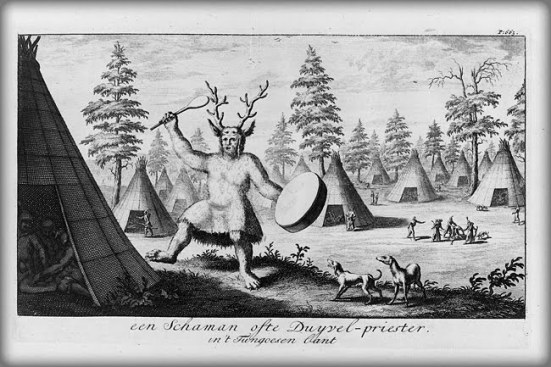
So antler frontlets date back to the Mesolithic era.  Evidence of humans wearing them as costuming is seen in both archaeological digs and in cave paintings.
Backside of antler frontlet in British Museum collection
This blogger talks about the shamanistic uses of the headdress during the Mesolithic period.

The Sorcerer drawn by Abbé Breuil's from Les Troise Freres cave
This cool group of British history enthusiasts did a few workshops (click the link to see their pics) teaching people to make their own headdresses based on the artifacts found at the Star Carr site in Britain. They used this crafting session to educated people on Mesolithic ritual involving "shamanic disguise"
Siberian Tungus Shaman, 1785 (British Museum)
Antler Frontlets have been found at multiple archaeological sites across Europe (2 in Germany & 1 in England) and artifacts from Star Carr can be seen at the British Museum.  It is notable that they were often thinned out to make them lighter in most artifacts.
 
interpretation of a Shaman headdress from the grave found in Bad Dürrenberg in the 1930's created by "ashtarcommandcrew"
Further reading:

Conneller, C. 2004 'Becoming deer: corporeal transformations at Star Carr', Archaeological Dialogues , Vol.11(1), 37-56, 1478-2294
Cambridge Archaeology Project at Star Carr
British Museum artifacts 

Check out my earlier blog about this project from a fashion side... 

UPDATE:
(video) Time Team Episode S20E14 special - Britain's Stone Age Tsunami (2013)