10 May 2017

twin peaks - a gif primer

i love me some twin peaks. i already have my outfit picked out for may 21. i saw the original movie opening day in the theatre as a sophomore in high school. the series is wonderful & completely fukt up. in today's marathon tv sessions, it will go super fast. 2 seasons (30 hour long episodes) + 1 rated R movie. You want watch the movie after the series. You can find them both on hulu or find the series on netflix & amazon.

i wonder, did the network execs like not watch this directors other weird ass movies? how the fuk did he get backing for this twisted stuff? this is the guy that made the 1984 dune & eraserhead & midgets tapdancing in his film wild at heart with mf'n isabella rosellini.

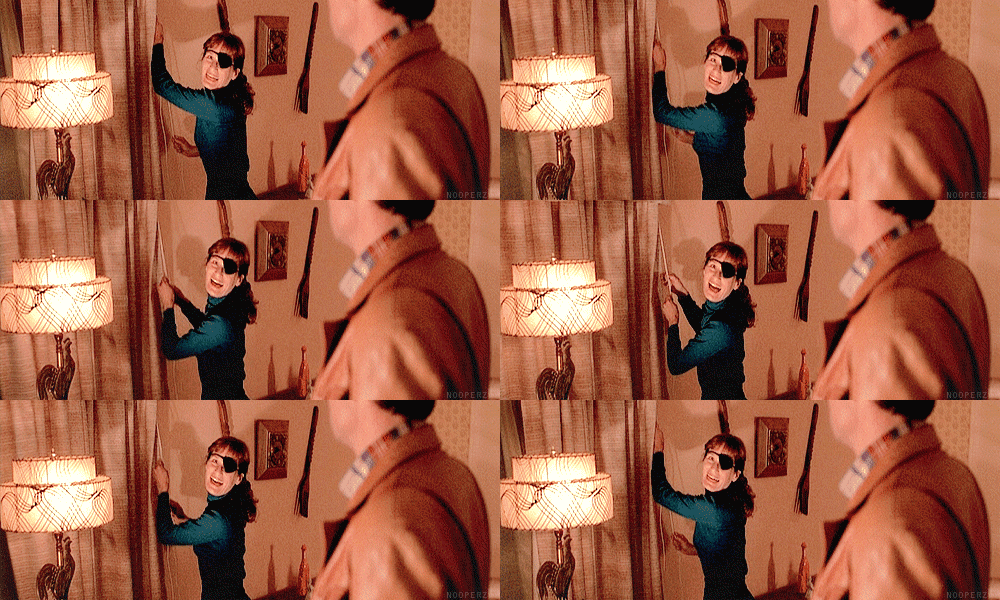
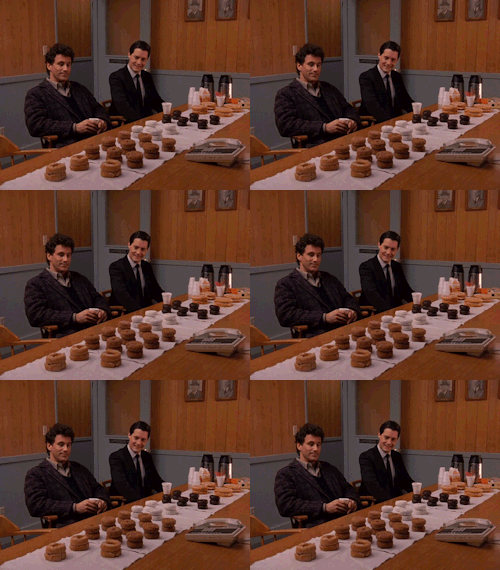
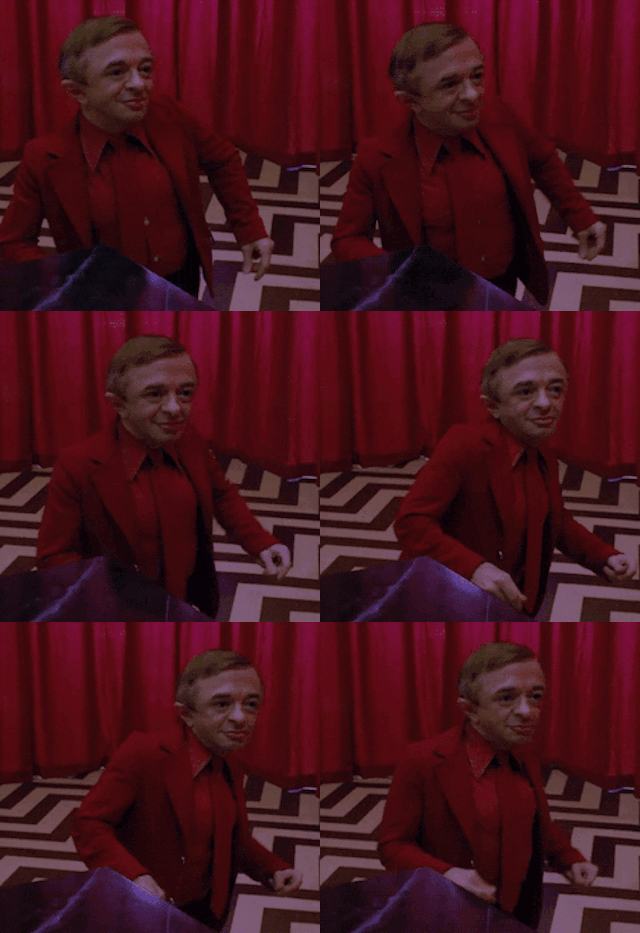
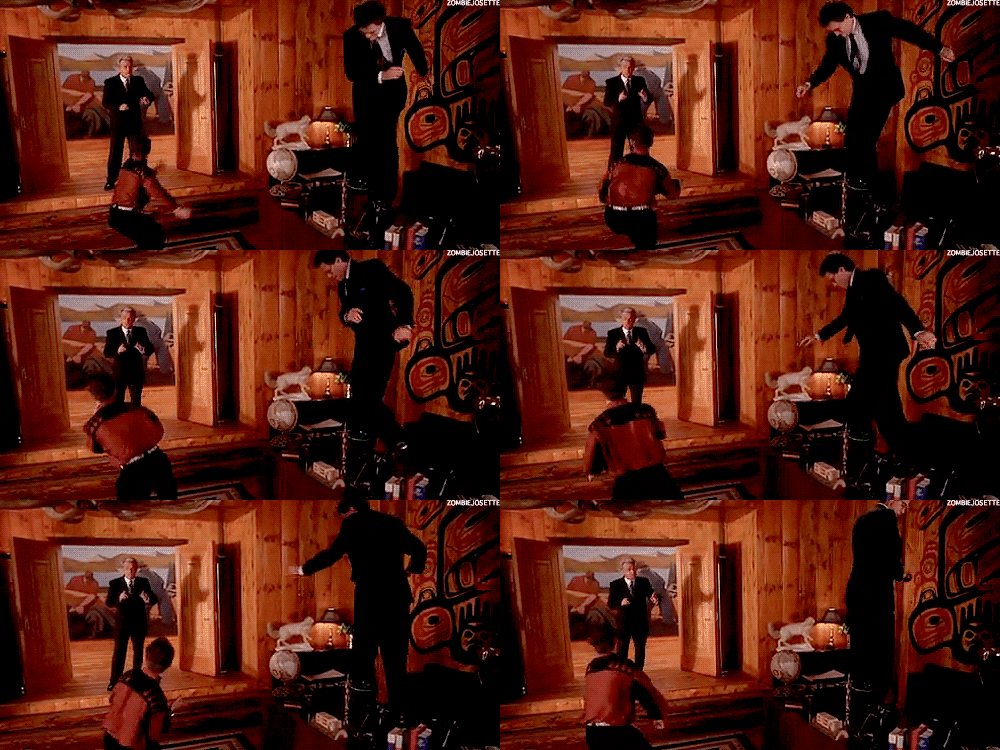
lynch likes to take super normal exterior & make it super weirdo inside. with an eyepatch or a secret coke habit or cross-dimensional travelling giants & midgets, or depending on the day, pie or donuts. just roll with it, its not going to be normal. its going to freaking oddball arty af. dirty, bruised & strangely beautiful.


when you get to the 2nd season remind your self that this ish ran on network tv, super fresh & modern even now. lol the censors were blown out of their chairs. the show was not renewed for a 3rd season. but man what a ride.

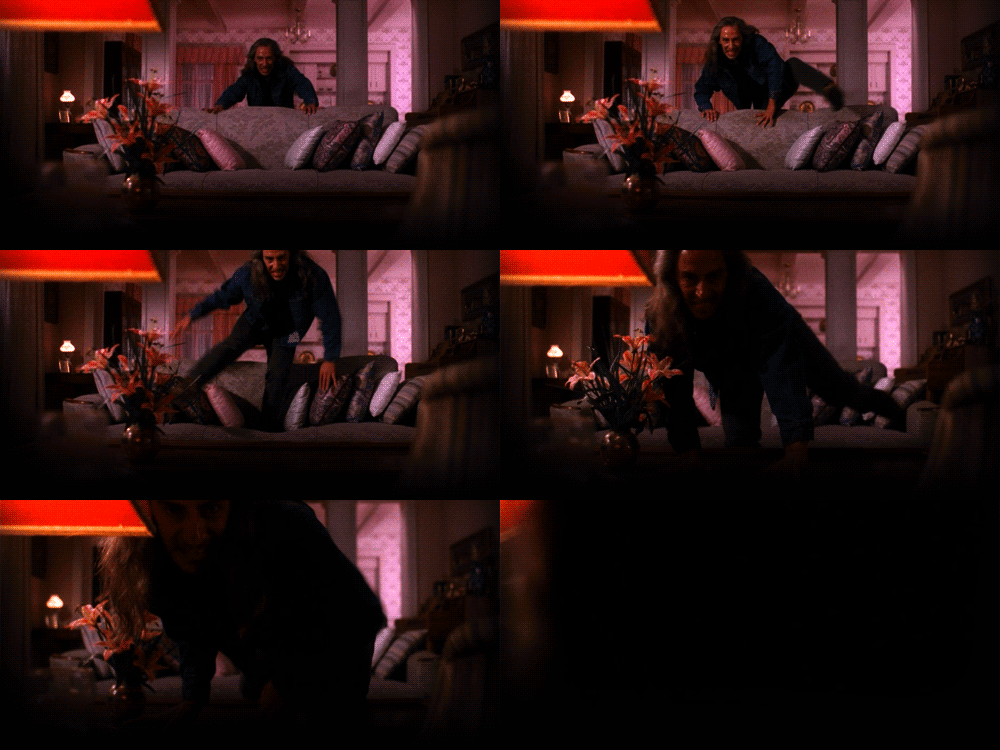
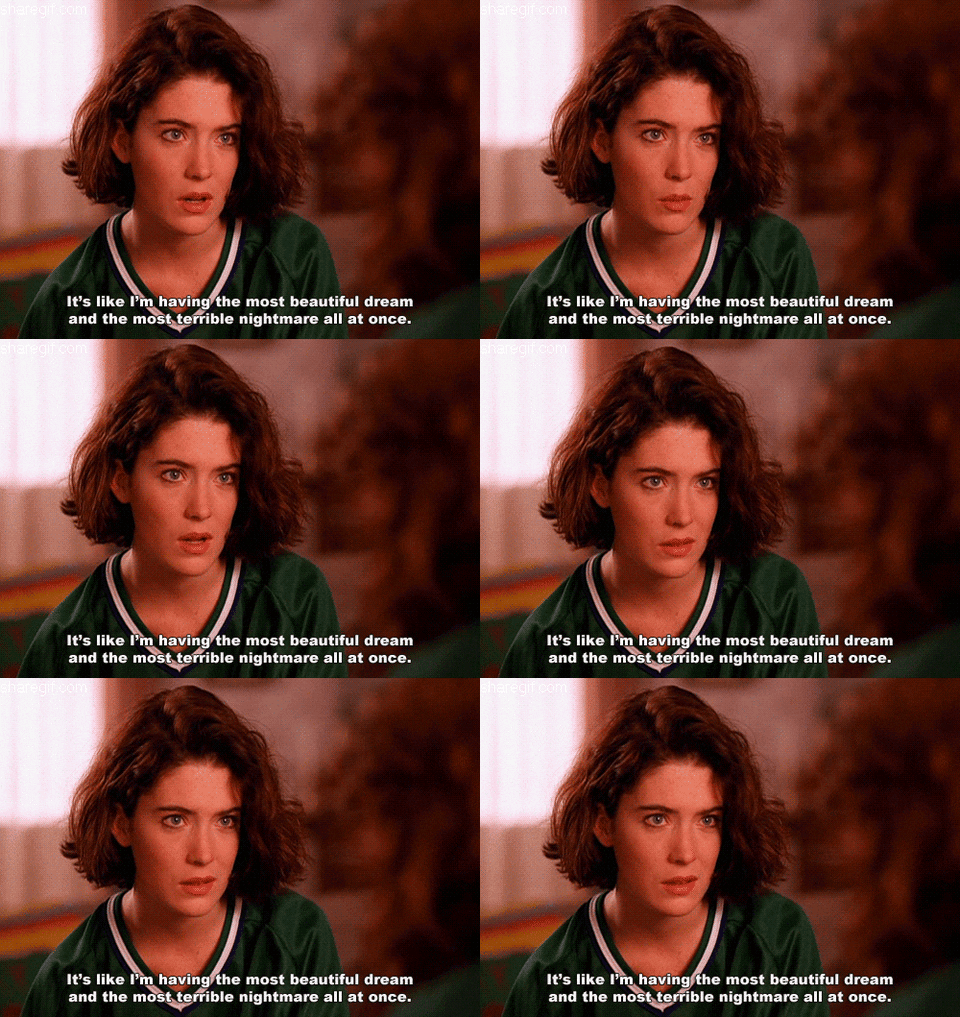
so here is my synopsis for people that don't watch the show told in gifs. i will try not to leave any spoilers...

SYNOPSIS in moving pictures


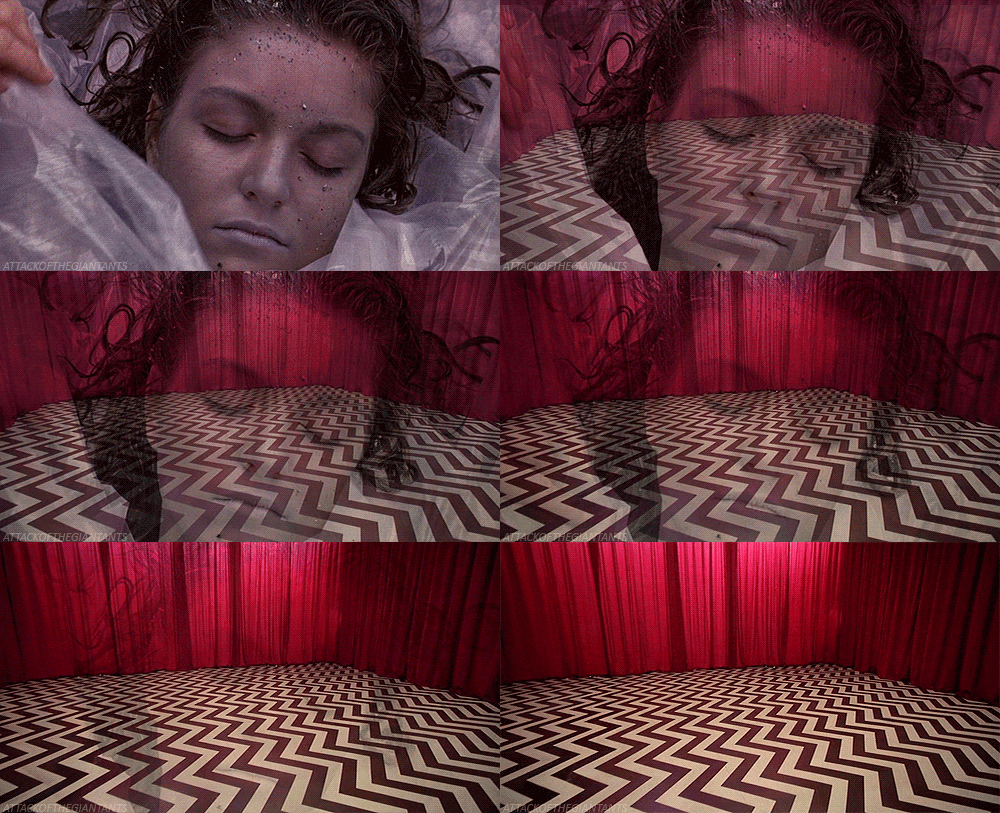
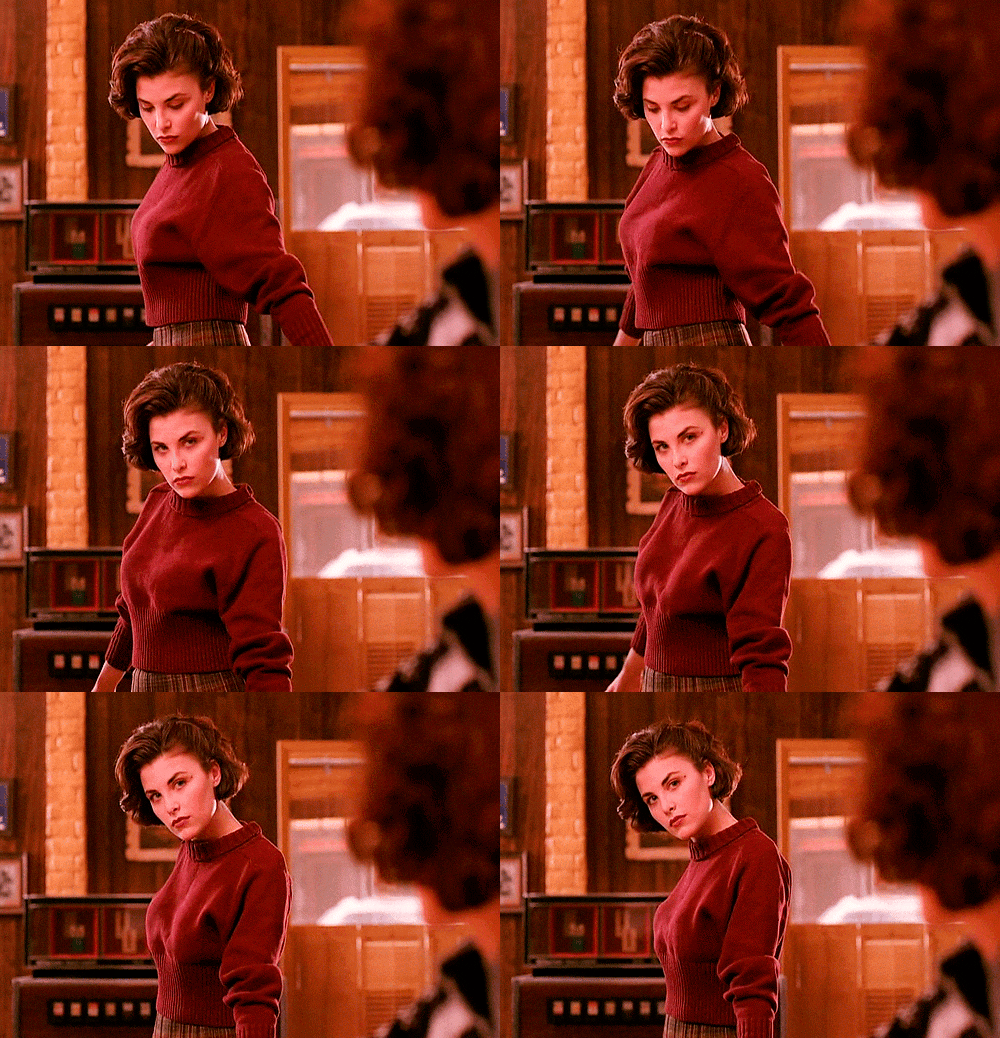
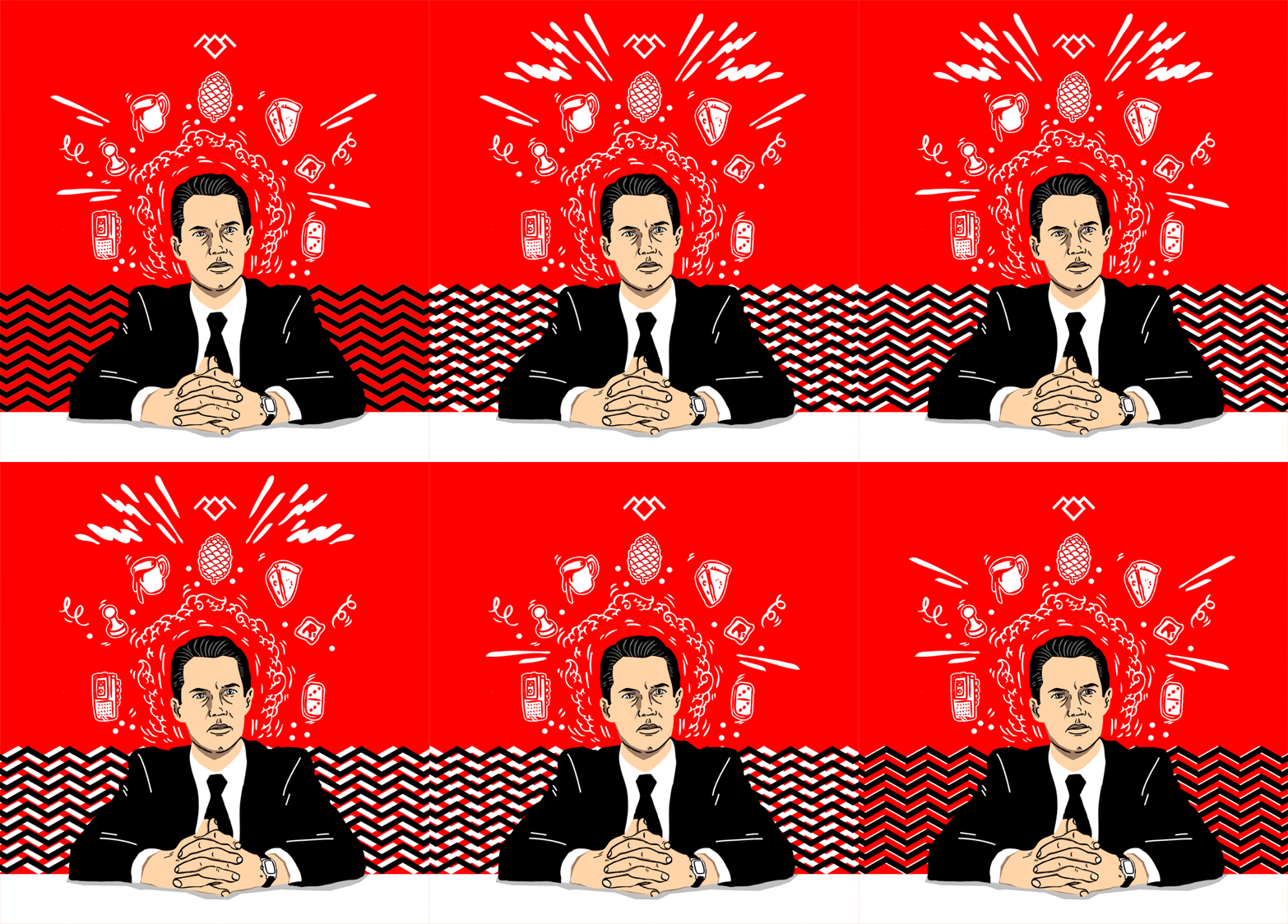
the 30 episode tv series follows the mystery related to the death of a popular high school girl named Laura Palmer, who dies fairly early in the first episode so this isn't really telling you anything. She seems to have it all, steady football player boyfriend, charity work, and extracurricular activities galore including some of the seedier variety. The local police find her body on the beach wrapped in plastic and call in for federal backup, in the form of the series detective, Agent Dale Cooper.


Cooper investigates the people associated with the young girl and learns about the minutaie of the friendly small town, all the way down to the best place to get cherry pie and coffee at the local diner.

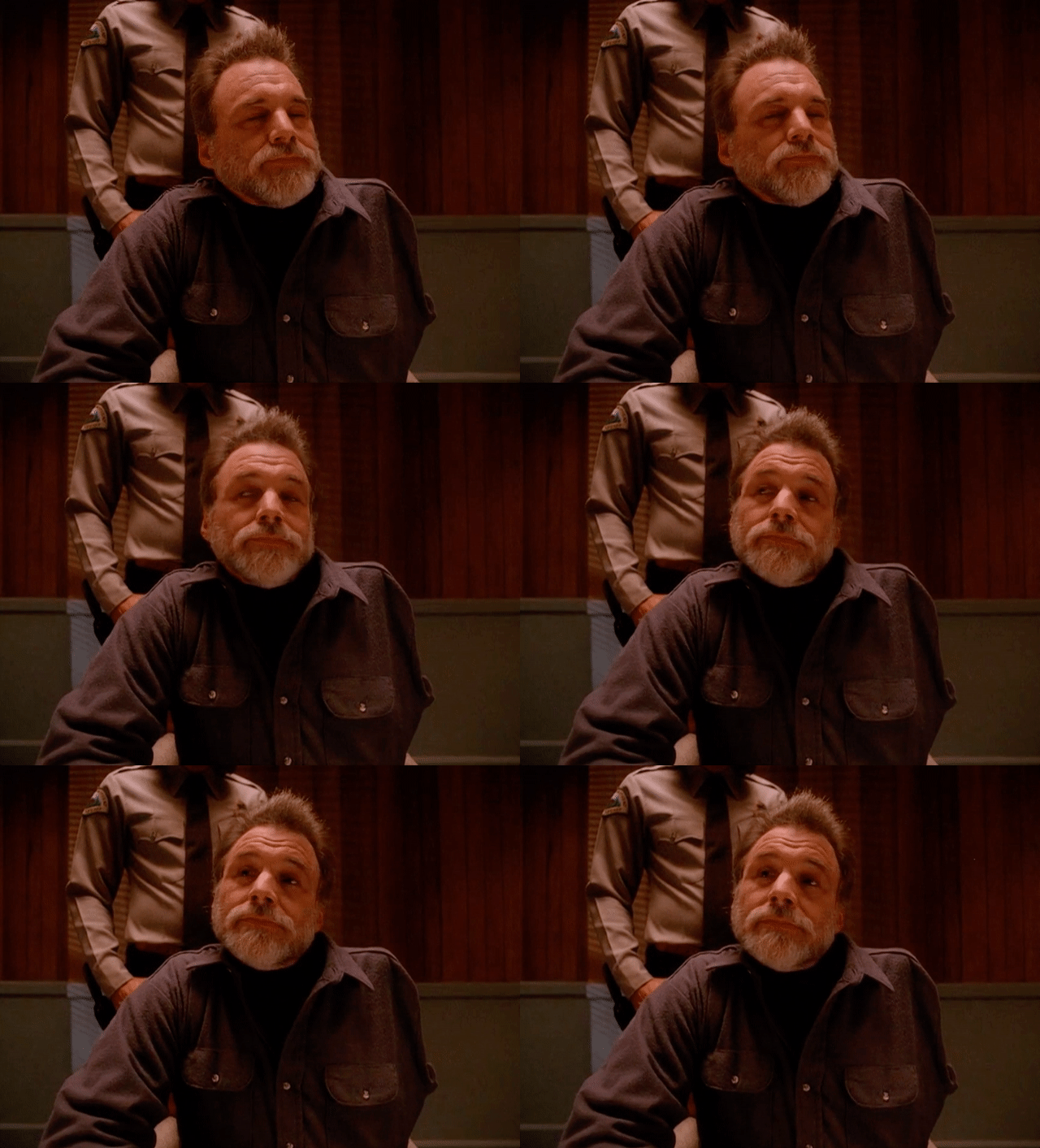
However, under the Mayberry - Leave it to Beaver -like exterior of the little down, dark forces are at play.  Agent Cooper teams up with the local sheriff's crew to figure it out. Together they try to uncover leads, some of which point a local bar & brothel, others more surreally metaphysical. Often we wonder if the culprit is more domestic than exotic.


Agent Cooper meticulously combs through all the evidence, the dead girl's possessions and those who loved her.

The show has a distinctive look and super non-traditional storyline. Expect more art house than soap opera in this teleplay.


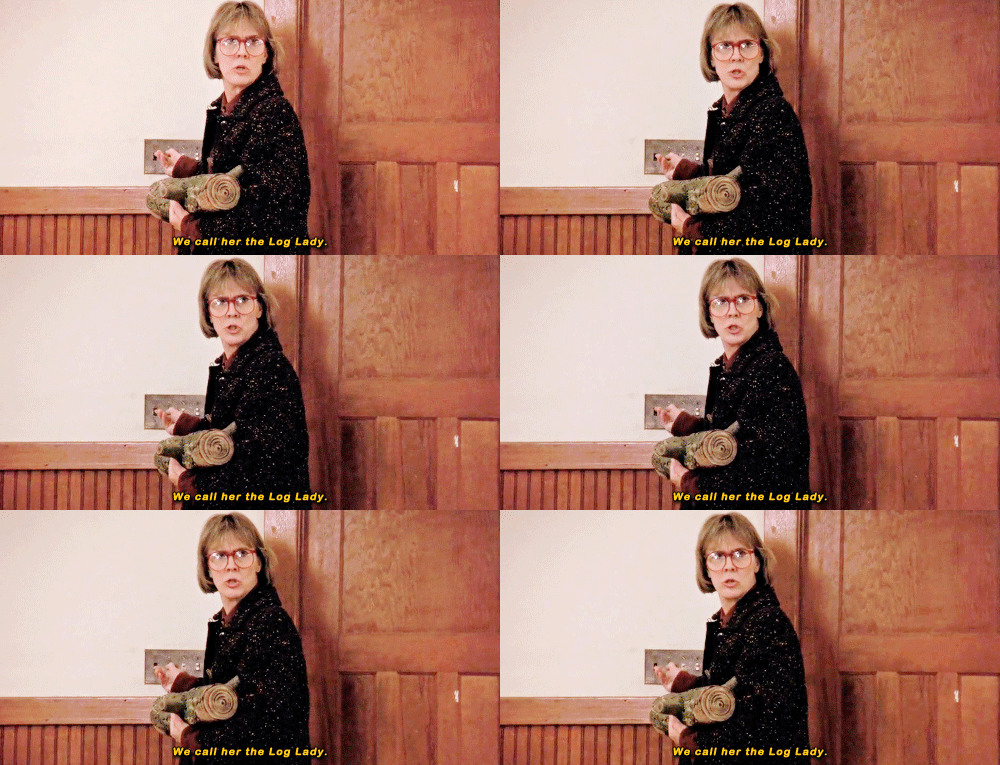
Clues come from unusual places like "talking" logs and dreams, in addition to more typical clues gathered at the scene & from interviewing suspects.


Expect cameos by stars like David Bowie, Heather Graham, David Duchovny in drag, and the director himself as a hard of hearing agent.


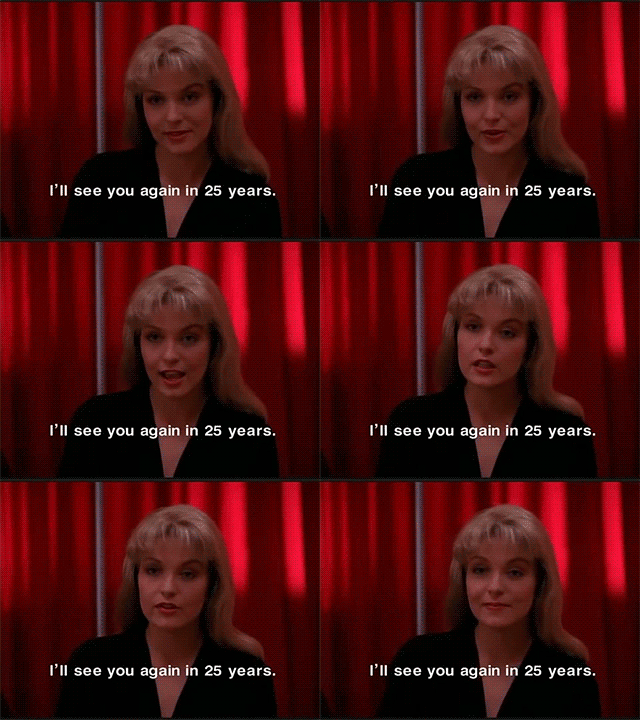
& true to Laura's word back then, the series is back after 25 years. But now on cable with the same director and cast... can't wait


26 March 2017

Gamifying Social Change Advocacy

          If the buzzword of Internet 2.0 is interaction, then the path to social change can be helped by online gaming.  www.GamesForChange.org is a website devoted to showcasing the hundreds of games developed by organizations whose humanitarian missions benefit from improved awareness, increased participation of new members, and multiplied donation funding. The Information Age is oversaturated with media online and being exposed to content with a positive agenda is refreshing and possibly quite necessary to capturing the attention of the masses.
I spent some time and looked at dozens of the games links to the website's database and only cracked the surface of the massive amount of content they share.  The games are sorted by theme/cause.  Most are free and streamable, others are older links which may be flash based or require downloads.  A few games on their site come at a cost, but all of them are hosted by others. The site even hosts contests and a conference for developers who are using gaming for good.
However, discussing GamesForChange allows me to explain how a game could ever promote social change along with providing the list of some of the favorites I discovered, which seem to promote social change so well. Balancing a serious message with compelling gameplay is tricky business, finding a loophole that encourages donations or volunteer involvement is the overarching goal in most cases.   Awareness is not enough without soliciting real world action.
So games make money for the cause in several ways. Adding a banner or frame that includes a donation link is a great way to keep your message in view of the player.  Former successes like Zynga, paved the way to normalize in-app purchases for people with non-charity games like Farmville.  Charities found that not everyone is opposed to paying for a click and sometimes includes these options in their games.  The most direct method to solicit is by asking people to purchase the game outright in the Itunes or Google Play store.  Offering a game app or online game is a great way to get your cause visibility with target groups who may spend more time shopping for games instead of reading the news or researching noble causes.
Sidekick Cycle is available on both Itunes and GooglePlay and for a small one-time fee you can download the game app which lets you race your bike, do tricks and level up by buying "sidekick" character animals that help you in the game. The funds raised from the game go to buy bikes for kids in third world countries who use them as primary transportation to improve their quality of life.
Sites like GreaterGood.com's The Hunger Site and www.FreeKibble.com operate on the premise that encourages viewers to visit their site each day. By clicking the "donate" button daily you are contributing to the cause. The site has advertising sponsors that pay them based on the number of site visitors and clicks they get each day that are exposed to their ads.  This is similar to the setup for the trivia game freerice.org that shows lots of ads in the margins, but that is how they get their cause sponsored.  Advertisers are happy to pay charity sites for your time and views. GreaterGood even has a shopping portal where online stores pay the charity for referring you to their products.
However a lot of charity games do better jobs of educating site visitors and increasing public awareness of their cause.  Just posting a picture of a colored ribbon and the name of your charity is great for branding, but it’s more superficial than the conversion you get when you offer in-depth information to your audience.  The goal is to encourage interaction, not just passive receipt of information.
Games that improve awareness and educate people about the cause are more common than fundraising games.  How a developer influences positive social change takes many shapes in the game world.  Some gamers will livestream their sessions and ask their viewers to sponsor their time online using www.charitylivestream.com This is much like a marathon runner or jump-rope user who solicits donation sponsors ahead of the event to multiply the money raised by the time they spend on the activity.
More often you find game storylines that feature the charitable cause liberally within the plot. Some sites prefer to use embedded educational videos along the route of game play to solidify their point.  There are even games that make their points in conceptual ways using non-traditional narratives to lead the player to understanding. These are more effective that simply slapping a logo on a game and branding it with your charity's name, which would require the player to exit the game and research to seek out information on your background cause.
One of the best games I found on GamesForChange was www.playagainstallodds.ca which is hosted by the UNHCR Refugee Agency and allows the player to experience some of the difficulties of the refugee experience in a gamified way.  The UX on the game is very simple and can be played in multiple languages.  There 12 sequences of gameplay divided by 3 major scenarios, (1) escaping the country and avoiding arrest, (2) finding sanctuary in a border country (3) trying to settle and find work in a new country.   The game is filled with different, unique minigames such as a timed exercise where you must fill the limited space in your backpack and escape out of the window before time runs out and the authorities capture you.  If you forget important things like shoes, money and identification papers your escape can be derailed.  Hard survival choices like leaving behind wounded friends and avoiding predators at the border make the reality of the refugee situation more relatable and real for the player. The animation in this game is top notch as is the plotline.  The differences in the minigames really keeps the gameplay interesting and adds difficulty to keep you engaged.
Other turn based simulation games like http://playspent.org tackled the reality of living paycheck to paycheck and lack of emergency funding that sends so many Americans spiralling into homelessness. One civil resistance simulation game http://peoplepowergame.com is intended both to spread awarness but more importantly to offer scenario projections for organizers who are interested in launching large scale projects for social change and want to consider different risks and options.
The variety of ways to use gamification to influence social change is astounding. Games like Never Alone, increases awareness of native foodways and honor oral traditions of First Nation indigenous people instead of objectifying native people in games. 

Other games approach social change issues related to poverty by offering multiple games designed to improve the players budgeting habits and financial literacy. Https://financialentertainment.org/games had a a half dozen games that had unique gameplay, including one that helps you not waste your tax refund, and a truly addictive game where you learn more by playing as a vampire nightclub owner who is saving up for retirement.  This game isn't selling retirement products, it is trying to educate people in a way that prevents poverty in senior citizen populations.
Games can be addictive for some people, their draw often undeniable. If you are a game developer, it is a worthwhile use of your talents to donate services to humanitarian charities and help them build engaging content that helps them tackle the real world problems that undermine our society.  If you are a charity seeking innovative ways to keep people engaged and inspire activism for your cause, consider creating a game. As our society evolves to the pressure of technological change, it is important that we consider all avenues for financially supporting positive innovation and educating the public to inspire a better world.


02 March 2017

Dr. David Hanson on the Social and Financial Impacts of AI and Automation

Dr. David Hanson is an innovative robotics designer who was nice enough to talk to me about his predictions on the social and financial impacts of automation and artificial intelligence for my midterm research.


1. What will be the biggest social impact of automation and AI?
Hard to say. In the short term, the biggest social impact will be on improving efficiencies in the economy, which will mostly benefit the wealthy and increase the economic gaps. As society is disrupted by waves of accelerating change, the ways people relate to technology and each other will be impacted, in ways that are difficult to predict exactly. Certainly many changes will be negative. People will lose their jobs, and opportunities for governments and companies to manipulate people for negative sentiment will grow more sophisticated. In the long run, truly sentient AI will change history in ways that will redefine the very meaning of humanity. I hope we survive that. I hope that such AI can help correct destructive trends, and I aspire to help realize such AI. If we succeed in this aspirations, life will probably become very good for everyone. It's a race against the myriad ways that humanity could perish or spiral into horrific suffering.

2. Will automation eliminate the need for humans to work?
I believe so, but there will be tremendous disruption, turmoil and trouble along the way. Hopefully such elimination of jobs will be accompanied by increased opportunities for bettering the lives for the displaced. We have to take steps to make that happen.

3. How long do you think it will take for that to happen?
Hard to say, but maybe 15 years.

4. What kinds of occupations will humans have instead?
I hope humans will have the chance to self actualize, and evolve into new states of being.

5. What place in society to you see for unskilled humans in the future? 
In the short term, unskilled people will often become destitute, but with great opportunities for distraction through cheap immersive entertainment media. I hope we can rise up to the challenge and offer universal basic income combined with a good education system to help unskilled displaced workers follow their dreams, but that depends on enlightened leadership. A few nations and companies will provide, most won't.

6. What is the biggest economic impact of a.i. on America?
The biggest impact of ai on America remains in the areas of big data and search. Soon that will change to general resource management, and myriad other uses. Including intelligent 😉

7. Do you have theories on how humans will make income if they lose their jobs to automation?
Wherever they can. Sometimes people will take crappy jobs, some will go of the grid, others will take welfare, others will adapt to new jobs. Given the many areas where machines still perform poorly, people will make money in creative pursuits, which generally machines can't yet perform well. I hope we can provide a universal basic income, and develop the tools to help people find purpose beyond mere jobs.

Hanson's "Sophia"
8. Do you think living wages or universal wage could happen in America? What would need to change in our society economically for that to happen?
Regime change will be needed before universal basic income will be possible in the U.S. Local governments could make this happen first.

9. What is the economic impact of drone use on American soil? (related to the military industrial complex jobs)
So far, the economic impact of drones in the U.S. is small, but we are on the threshold of radical changes if drone delivery takes root, and if drone surveillance becomes common. A fascism of ultimate convenience shopping.

10. Is full workforce automation economically sustainable when considering energy use and manufacturing materials consumed?
Sustainable automation depends of increasingly efficient use of energy and resources. We are getting smarter and more, but on a debt drawn from the ecosystems. They will collapse eventually, and this could kill civilization. We need to get much smarter and more before this happens. It will probably require greater than human intelligence and creativity, and this is where super benevolent superintelligent AI could save us.

11. What prevents employers from going to a fully automated workforce today?
Robots can't yet do all the things that people can. Most manufacturing requires manual dexterity that only humans can provide so far. Any deep adaptive problem solving still requires people. Many domains of human labor that could be automated, aren't cost effective to automate yet.  These factors likely will change in coming years.

Want to learn more? Check out David's Ted Talk below, "Robots that Show Emotions."

 
Dr. Hanson's Ted Talk "Robots that Show Emotion"
Hanson with his bot Einstein

 
Hanson's re-creation of "Philip K. Dick"


Zeno by Robokind - Robots4Autism™
Dr. David Hanson with his son Zeno and his robot Zeno

07 December 2016

Neighborhood Characteristics that create Stress may cause Depression

RESEARCH JOURNAL REVIEW:
Cutrona, C. E., Wallace, G., & Wesner, K. A. (2006, August). Neighborhood Characteristics and Depression: An Examination of Stress Processes. Current Directions in Psychological Science, 15(4), 188-192. doi:10.1111/j.1467-8721.2006.00433.x

 I.                   Purpose of the Study (In your own words) –

A.                What were the authors studying and why?

Authors summarized multiple studies in this review about how “neighborhoods with poor-quality housing, few resources, and unsafe conditions impose stress, which can lead to depression.”  These environmental characteristics increase the negative impact of stressors unique to individuals’ personal life and can hamper the formation of supportive interpersonal bonds between people.
Why did the authors study this? It is meaningful for our society to understand the “role of neighborhoods” in a resident’s potential for developing depression because (1) Residents often blame themselves mistakenly instead of recognizing their well-being is genuinely affected “by the context around them” and complications of their locality (2) outsiders don’t understand the extent these residents of impoverished areas are negatively impacted “by their surroundings”, and often erroneously blame these residents’ mental health problems on perceived personality flaws or race instead; (3) treating each impacted person separately is much less efficient than dealing with public health threats on a broader community level. Neighborhoods that subsist with inferior quality resources and lack the benefits of “integration with more prosperous families” may find increased instances of social dilemmas related to “threats to mental health.”

B.                 What did they expect to find (i.e., what were the hypotheses?)

Research studies will find stress links between “neighborhood characteristics and depression.” These characteristics influence how intensely residents are stressed, how vulnerable to depression a person is “following negative events in their lives,” and “interfere with formation of bonds among (other) people” creating limited interpersonal support systems also leading to lessened “informal social control,” deficient social support, and substandard family-role performance. “Neighborhood stressors” often result from scrambling for scarce resources and/or predatory people inhabiting the neighborhood who pose physical threats to other residents. In comparative studies of residents in better, less adverse neighborhoods many of these issues were not as common.

II.                Methodology - Review the basic methods.

A.                How did they measure what they were studying?

When reviewing other studies based on “systematic observations” by researchers and resident surveys, the authors considered how personal vulnerability to depression may be effected by neighborhood characteristics such as physical features (accessibility to basic resources like hospitals, reliable public transit, retail stores, recreational facilities), structural characteristics (percent of neighborhood that are employed, impoverished, educated, minority), and negative functional characteristics (unlawful behavior, social disorder). This consideration was made by statistically getting rid of effects like “individual and family characteristics such as income, education, employment status, age, and race.”

B.                 What type of people were they studying?

The studies in this review analyzed residents of high poverty neighborhoods by U.S. Census tracts (roughly nine city blocks, about 4,000-6,000 residents in each tract), and some studies broke these units down into smaller block groups or face blocks.

III.             Results and Discussion –

A.                What did the researchers find?

Based on comparison to other studies, researchers found that neighborhood stressors may be imposed by physical characteristics or neighborhood residents that pose threats to physical safety. Examples of negative physical characteristics that can cause stress include: lack of accessible resources, high traffic density, low quality housing, etc. Ratings related to the quality of housing predicted depression more often than simple being low income in rural women studied in 2000. Women who moved out of unsatisfactory apartments into Habitat for Humanity homes, showed a decrease in reports of sadness. “Lack of access to needed resources is demoralizing because of the extra effort required to meet daily needs… More refined measures that capture type, accessibility, and distance to community resources are needed.”
“Fear of victimization” is another stressor that impacts the well-being of residents. “Social disorder, not poverty per se… most directly causes depression in areas with high crime rates… for both children and adults.” Other studies shows that impoverished areas with little crime, did not show the same tendencies for depression.

“Vulnerability to depression following negative events” is more likely in bad neighborhoods than in in neighborhoods that have more advantages. “Reasons for this heightened vulnerability may include lack of resources, the absence of role models who provide hope for personal success, and local norms that promote ineffective coping and negative interpretations of events.”

Interpersonal Relationships are put at risk in less advantaged neighborhoods. A 2005 study showed that areas with high turnover, offer less tendency for people to form relationships with their community due to mistrusting neighbors due to high crime rates. “Relationship disruption may have several consequences relevant to depression, including lower levels of informal social control, inadequate social support, and poor family-role performance.

This leads to a lack of “Informal Social Control” in these troubled neighborhoods, people don’t “monitor or control each others’ behavior and norms that permit antisocial or maladaptive behavior may arise… leading to problems like job loss or unintended pregnancies that may turn into depression. A 2002 study showed that comparatively, nicer neighborhoods express disapproval, alert authorities or form watch groups to maintain social niceties in their area.

Residents are areas with high-social disorder often feel their relationships are less supportive, “because support providers themselves are highly burdened. Living in impoverished neighborhoods “appears to weaken the protective power of social resources in people’s lives,” according to a 2003 study. Neighborhood poverty also predicted lower-quality parenting behaviors” and less marital warmth, both of which can contribute to issues with depression.

Cutrona’s earlier 2000 study determined that not everyone has the same reaction to living in unsatisfying neighborhoods. “Some people with particularly resilient personalities can cope successfully, even in dangerous and disorderly neighborhoods. Other people are highly vulnerable to depression (and appear to be significantly harmed psychologically) when they live in adverse surroundings.  The bottom line finding is that “living in disadvantaged and disorderly neighborhoods eventually erode optimism and replaces it with hopelessness and negativity.”

B.                 Did the results support or fail to support the authors' hypotheses?

The results support the authors’ hypotheses. They compared their hypotheses to similar studies.

C.                 What is the meaning of the results?

More attention must be paid to the influence of contextual factors like neighborhood characteristics on mental health.  Additional studies are necessary to find the “most effective ways to mobilize neighborhood residents to meet common goals and improve the context in which they live.”

Neighborhood context has an impact on feelings of well being, above and beyond personal stressors. By increasing stressors, intensifying “reactivity to negative life events” and deterring the growth of healthy interpersonal relationships, neighborhood of residence can influence a “wide range of psychological processes and merits further study.”

Comparative studies where residents were moved into a better area showed better mental health for residents. “Some of the problems associated with low income people should actually be attributed to low-income environments.”

The results of this comparative study mean that changes are necessary for improvements.  Suggestions for improving the design of future studies include: “analyzing family characteristics, using separate samples of residents to obtain information and outcome measures, study processes of factors that facilitate change.” In order to most effectively help these neighborhoods, we must empower residents to organize improvements. City planners must be mindful when designing subsidized housing and promote “economically integrated housing,” by avoiding concentrating poverty into limited areas which breeds “hopelessness, depression and other social problems.”
“Greater collaborations across the disciplines of city planning, economics, sociology, and psychology are needed in generating such data.

IV.             Personal Reflection –

A.                What are your thoughts about the study and the questions asked?

I think the study asks important questions about how we focus studies related to poverty and high-crime areas with greater consideration paid to the potential for depression in residents.  They asked important question about the correlation of factors and causality to mental health issues.

B.                 Does the study relate at all to your interests or life?

This study relates to my interests in helping the less fortunate and providing more balanced decision making in city planning decisions and treatment offerings in low-income areas.

C.                 What did you learn that was new to you?

I learned that more research is needed, and what studies have been done seem to support the author’s supposition that neighborhood characteristics generally have impact on the potential for depression in the residents.

D.                Is there anything missing?

Answered above

E.                 What questions does this study raise for you?

What are good ways to encourage economically integrated neighborhoods? Can treating community mental health issues on a broader level be more cost effective than dealing with individual issues of depression that may one day lead to more costly criminal impacts?

F.                  Do you have any ideas about how to study this concept differently?


I am curious if these trends related to neighborhood characteristics have been measured by researchers outside the United States. An extended review that included international studies on similar topics would be recommended.

05 December 2016

Portrayal of Natives in Media

Sociological Critical Analysis of Native Representation in Media

The portrayal of natives in media affects how they are treated by outsiders, and often impacts how natives see themselves and perceive their own potential for success. For perspective, we will cover the history of native representation in media like film. We’ll discuss the implications of media stereotypes and their effect of youth self-esteem. That labeling people as “oppressed” by on media stereotypes is an overgeneralization. How typecast John Wayne’s cowboy characters promote a dangerously racist hegemony of imperialism and genocide. We’ll remind you that natives are not extinct. It may look that way in the media, but just like with other minority groups, there is a disproportionately low use of native actors in Hollywood.

Yet 21st century content creators have an exciting opportunity to right some of the wrongs with how indigenous people are represented in media, by using more native voices in modern contexts. Strides in the right direction have been taken by Canada and Australia, but there is much work to be done. This critical analysis will review this theme through the lens of several television shows (Murdoch Mysteries, and Roseanne), in addition to reinforcing some of the sociological concepts found in the documentary film, Reel Injun. “The media plays a very important part in forming the discourse on Aboriginalism, as many are influenced by media representation and base their views on Indigenous people as a result of these representations” (Garetto 2013).

Historically speaking, media has been fascinated with portraying Native Americans as exotic novelties from as far back as the early days of Edison’s moving pictures in the late 1800s. However around the 1930s the emphasis shifted to showing Natives as dehumanized savages to be killed indiscriminately in westerns. John Wayne’s movie characters usually portrayed that he was more a “true American than natives, who must be stopped from settling their own land” (Reel Injun 2009). This interpretation of that era’s media glosses over the genocidal message being presented to the audience, “A good injun is a dead injun” (Reel Injun 2009). This fictional depiction of the “Indian resistance served to fuel the myths of conquest and glory, and the American divine right to conquest” and occupation of the land (Common Portrayals of Aboriginal People n.d.).


How did our society come to accept the socialized hegemony of such harsh marginalization of an entire ethnicity? In part, this false consciousness has been perpetuated through the use of stereotypes in mass media. Often audiences use mass media hoping to gain information about the world and their identity, as well as find models to imitate (Berger 2014). Negative models in mass media affect the self-esteem of impressionable youth, this implicates how this group views their own potential for success.

“Ward Churchill argues that the myths and stereotypes built up around the Native… served to explain in positive terms the decimation of Native tribes and their ways of life by ‘advanced’ cultures in the name of ‘progress,’ thereby making it necessary to erase the achievements and very humanity of the conquered people. ‘Dehumanization, obliteration or appropriation of identity, political subordination and material colonization are all elements of a common process of imperialism,’ he says. ‘The meaning of Hollywood’s stereotyping of American Indians can be truly comprehended only against this backdrop’” (Common Portrayals of Aboriginal People n.d.). Due to the dehumanizing effect stereotypes have of the perception of natives by consumers of popular culture, there are few roles offered to Native Americans in media. The few roles out there are typically objectified extras, historical caricatures.

Natives make up around 2% of the American population but were only represented in less than 0.4% of characters in television and film (Leavitt 2015).  Considering these population statistics, “Native Americans experience ‘relative invisibility’ in the media. When they are included, they generally are portrayed as historical figures – individuals from the 18th and 19th centuries who wear buckskin, ride horses or live in teepees. When they are shown as modern people, they often are associated with addiction, poverty and a lack of formal education” (Leavitt 2015). “In the few television programs that Indigenous people are shown in, it is usually in a negative light, and they are presented in a scenario as the victim”… or as a token in a specialized role (Garetto 2013). Native characters are generally objectified into stereotypes and used as a plot device, as an “allegorical tool for any oppressed people” the author may want to reference metaphorically in their story (Reel Injun 2009).

The three most common of these stereotypes of Natives typically seen in media are the Indian Princess, the Native Warrior and the Noble Savage:


  • “The Indian Princess is the Native beauty who is sympathetic enough to the white man’s quest to be lured away from her group to marry into his culture and further his mission to civilize her people…. The (first) nations of this country never had a concept of royalty. We do not have kings, queens or princesses.” (unless you mistakenly count powwow princesses, which is more a non-political contest like a beauty queen) …

  • The Native Warrior is fierce and formidable and a threat to civilized society. Bare-chested and brandishing a war lance, this warrior is the epitome of the savagery that must be courageously overcome by “progressive elements” pushing West…

  • The mythic Noble Savage... Elevated to a sphere of goodness unreachable by those in contaminated White society and usually possessing some spiritual connection to the land… the Noble Savage communes in a cloud of mysticism and places no value on material possessions.” (Common Portrayals of Aboriginal People n.d.)

Recognizing these stereotypes as caricatures is the first step to improving how Natives are portrayed in media. Yet, “most destructive to the image of Aboriginal people is the lack of character and personality afforded them by the media. Aboriginal people are almost always cast in supporting roles or relegated to the background, and are rarely allowed to speak or display their complexity and richness as human beings. Whatever character they do have, tends to reveal itself only in terms of their interactions with White people. Rarely is an Aboriginal portrayed as having personal strengths and weaknesses, or shown acting on his or her own values and judgements” (Common Portrayals of Aboriginal People n.d.).  This rule of thumb is quite similar to the guidelines set by the Bechdel test for interpreting the roles of female characters in media.

However, as underrepresented as women are in film statistically, there may be a greater social problem of cultural misalignment with how minority groups like Native Americans are portrayed in media. Often “artistic license is liberally applied in portraying dress, customs, livelihoods and spiritual beliefs and ceremonies. This reduction of cultural heritage and diversity (which most audiences do not even notice) is seen by critics as both a symptom of the problem (not taking Aboriginal people seriously) and an unconscious yet systematic way of perpetuating erroneous stereotypes.” (Common Portrayals of Aboriginal People n.d.)

So in analyzing the following two television shows, I have considered the above points related to the portrayal of Natives in media. These points relate to common stereotypes, misuse of cultural dress, statistically low casting in major roles (often going to poorly painted, non-native actors), the socialized justification of genocide, and eminent domain as a symptom of the “divine right” of colonization. These things are considered in the context of media’s use of revisionist history myths that glamorize the genocide of western expansion and missionaries’ systematic destruction of first nations’ faiths and cultures. 

First, let’s discuss how two different television shows that portrayed natives with more respect paid to the modern native experience.  The episodes I chose seemed to have less objectified native characters than what you usually find in 20th century media like westerns, a genre well discussed by the documentary Reel Injun (2009).


The comedy Roseanne featured Oneida tribe member and groundbreaking native standup comic, Charlie Hill who played her son’s history teacher in the episode. The class puts on a Thanksgiving play but does not follow the traditionally accepted version of the story. In the kid’s play, the puritans are invited to dinner where they pull out guns and shoot down their native hosts. Roseanne and her family applaud the play’s storyline but the other parents are stunned by what they call “revisionist tripe,” and “violent propaganda” on a holiday they believe is about discovery. Hill replies with, “How could someone else discover America if my people already lived here? That’s like me going outside and discovering someone else’s porch” (Sydner 1995).

Roseanne’s family invite Charlie’s family to Thanksgiving, where he tells them more about the first Thanksgiving. Natives “fed them, taught them how to survive…but they stopped listening because we didn’t agree about how man and woman should be” (Sydner 1995). The Caucasian actors all portray Pilgrims in the flashback sequence where they make jokes about real beliefs held by puritanical society such as sex for procreation only, self-flagellation for religious penance, segregation of genders during public meals, etc. They talk about turning the natives into servants and caddies, and taking their land to create golf courses. Charlie Hills calls the puritans “brothers from faraway lands that call themselves ‘saints’” (Sydner 1995). The dismissive judgement of native culture by missionaries acted as a catalyst for genocide on this continent even prior to the arrival of English speaking colonists, including the military force of Desoto’s soldiers and priests. Religious intolerance has been presented as a weak excuse for genocide for centuries and this is alluded to in this show’s jokes.


We find this episode of Roseanne satirizes the very serious problems stemming from the perpetuation of the savage warrior stereotype, who must be killed, assimilated, or converted by the colonists according to the precedent propagated by media archetypes. The myths surrounding the American holiday suggest that natives are now extinct, but were then happy to become an occupied territory.  However, the aftermath of that first Thanksgiving included the systematic land grab known as eminent domain and the attempted genocide of aboriginal, first nations people who were native to this continent. Roseanne addressed these issues in a comical way, and hired all native actors and actresses to perform in this episode. Quite impressive is the use of comedian Charlie Hill, for his first person voice as a native, but also to remind the audience of the rarity of a native comedian on American network television (Hill was the first, appearing on Richard Pryor’s show in 1977). However, Canada networks have made significantly more progress in how natives are portrayed in media as we will cover next.


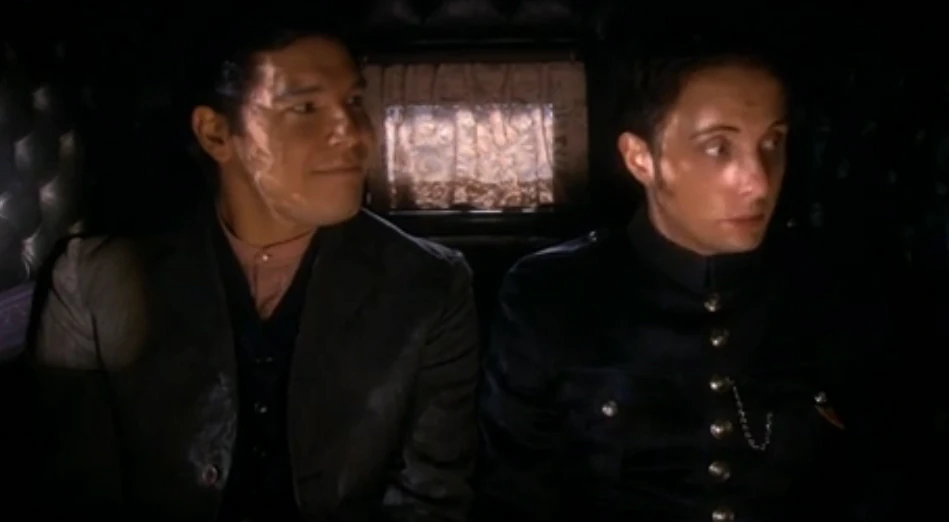
Continuing this analysis of aboriginal representation in media chronologically through the lens of the Native American experience post-colonization, we now discuss an episode of the Canadian television show Murdoch Mysteries which is set in 1897, Victorian-era Toronto. Native tracker, Jimmy McCloud is brought into the constable’s investigation of several deaths that appear to be wolf attacks. 
  
The dying man tells his true name to Jimmy in his native tongue. When Murdoch asks what he said, Jimmy tells them the man’s name was Wolf and he was of the Chippewa tribe. This simple statement honors the humanity of the native, giving him a name and region instead of simply objectifying his character as a minority token character.

At the end of the show, it is summarized that the killer shaman’s “wolf motif allowed him to reclaim his identity and terrify his enemies” (Aitken 2009). This romanticized use of the mystical warrior character makes for exciting stories but it can be an impossibly high bar for native youth looking for role models to relate to.


Through the narrative we learn this native character would like to become a policeman but is excluded due to his race. He says “I lived with my grandfather till age 10, then I got taken away to a residential school.... They tried to beat the Indian out of me at school. They should have beat the color off me too. It’ll be a long time before someone like me wears that uniform” (Aitken 2009). Even though he is sharp and better trained than some of the white officers, he is not allowed to be hired and is relegated to work in the stables. The subtle way the writer of this episode slipped in a commentary on the historically true, wide-spread beatings of natives in missionary run, government funded residential schools is a positive use of media that helps modern people contextualize the struggle to be native in a country that penalizes those of other faiths, or those who speak other languages.

As the mystery unravels, the coroner and detective find clues that the wolf is a man with a machine, instead of a beast or wendigo as suspected. A near victim confesses to the detective that he and the other victims accidentally shot their native guide and left him for dead during a hunting trip. “Our guide, an Indian, I don’t know his name… he didn’t exactly die, but he was going to” (Aitken 2009). This statement is a huge metaphor for the way that natives are often treated by media.  The accomplice to a shooting has de-humanized this guide due to his race, different language and customs. They do not know his tribe, probably didn’t ask his name and didn’t consider notifying the family of his accident. Instead they abandon a dying man cruelly in the lonely forest, without remorse. They assume he has expired, become extinct. However, the native guide did not die and has come to the city to take vengeance on the hunting party one by one.

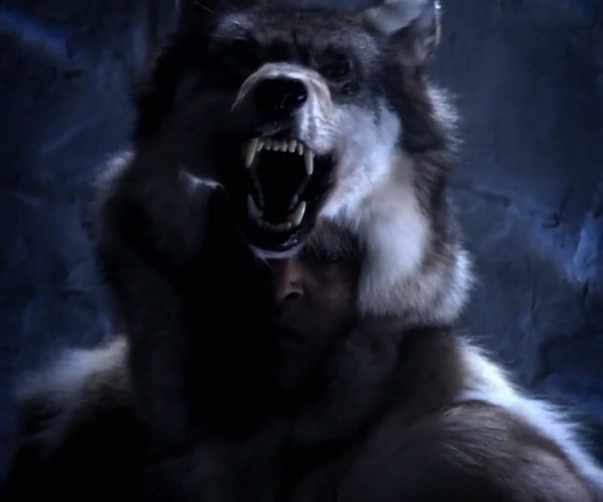
They learn the native guide who survived being shot was once a well-respected medicine man, who was later forced by colonialism to be employed as a hunting guide for graceless racists who almost murdered him. “He might be a shaman, we had one in our village and when he danced he wore the head and skin of a wolf… Missionaries put an end to the shamans, now we have doctors and good lord Jesus” (Aitken 2009), says Jimmy before he tracks the killer to the sewer tunnels. The police find the murder weapon, a bear trap like device affixed with machined wolf teeth. The killer runs headlong into the group dressed in the shamanic disguise of the wolf. He ignores commands spoken in English and is shot down by the Inspector.


The dying man tells his true name to Jimmy in his native tongue. When Murdoch asks what he said, Jimmy tells them the man’s name was Wolf and he was of the Chippewa tribe. This simple statement honors the humanity of the native, giving him a name and region instead of simply objectifying his character as a minority token character.

At the end of the show, it is summarized that the killer shaman’s “wolf motif allowed him to reclaim his identity and terrify his enemies” (Aitken 2009). This romanticized use of the avenginff mystical warrior character makes for exciting stories but it can be an impossibly high bar for native youth looking for role models to relate to.

Inaccurate and negative media depictions have psychological consequences. For example, exposure to common media portrayals has been shown to have a harmful impact on Native American high school students’ feelings about themselves, their community and their academic possibilities… Media depictions of Native Americans can influence how Native people see themselves. Some may be motivated to identify with representations, even if they are inaccurate” (Leavitt 2015) Imagine growing up in an era when everyone played cowboys and indians, only you can’t take off your racial profile like a costume and you always get chosen to identify as the indian in a story where the hero of the trope is predetermined by the formulaic stories, made popular in your society by movies and television shows. If you are a native kid, “does that mean you are just gonna lose every time?” (Reel Injun 2009). This negative impact on the self-esteem of natives has serious implications for our society.

Although occupied by foreign oppressors, native people are not extinct in North America. It is not too late for media to evolve and offer better roles for native actors in modern contexts. “We ought to challenge the media and treat Aboriginal culture as something that is continually evolving like our western culture, rather than a dead way of life” (Garetto 2013).

In development of new media, perhaps we can undo some of the damage done by media created during older eras. As content creators we must tell stories that show natives are human beings, included in storylines as modern regular people. Let reality inform your storylines and utilize native voices. Media can improve its track record by “disseminating more information about the Aboriginal reality, improving the training of communicators, involving Aboriginals in change processes, and using international media to affect local affairs” (Common Portrayals of Aboriginal People n.d.). 

If instead we “assume that … the constructed notion of Aboriginalism (where) Aboriginal people are portrayed as primitive and exotic, is in fact truth. The identity of Aboriginal people will become a thing of the past.Indigenous culture is still evolving and will continue to evolve in the future, whether or not we choose to embrace this change and encourage it will depend on whether or not we are prepared to challenge the way the media represents individuals” (Garetto 2013).

WORKS CITED

Aitken, Paul. "Werewolves." Murdoch Mysteries (S2 E12). Citytv. Toronto, Canada, 20 May 2009. Netflix. Web. 30 Nov. 2016.

Berger, Arthur Asa. Media Analysis Techniques. 5th ed. Thousand Oaks: Sage Publications, 2014. Print.
"Common Portrayals of Aboriginal People." Media Smarts. Canada’s Centre for Digital and Media Literacy, n.d. Web. 01 Dec. 2016. <http://mediasmarts.ca/diversity-media/aboriginal-people/common-portrayals-aboriginal-people>

Garetto, Joanna. "How TV Makes Us Think All Indigenous People Are the Same." Larrikin Post. N.p., 25 Aug. 2013. Web. 01 Dec. 2016. 
 
                                                                                                                           
Qureshi, Farah. "Native Americans: Negative Impacts of Media Portrayals, Stereotypes." Journalist's Resource. Harvard Kennedy School's Shorenstein Center, 10 Feb. 2016. Web. 01 Dec. 2016. <http://journalistsresource.org/studies/society/race-society/native-americans-media-stereotype-redskins>

Reel Injun. Dir. Neil Diamond. By Catherine Bainbridge. Rezolution Pictures / National Film Board of Canada, 2009. Film. Netflix. Web. 05 Dec. 2016.


Sydner, Ritch. "Last Thursday in November." Roseanne, Collection (E22). ABC. Los Angeles, CA, 21 Nov. 1995. Netflix. Web. 24 Nov. 2016.

14 November 2016

“Lines,” a Media Specific Analysis of an E-Poem

"E-poetry is not, or at least is not supposed to be, "digitized poetry," i.e., printed or handwritten poetry transferred to a digital environment, but poetry written specifically to be read on a screen. Yet, in practice, things are not so clear-cut..." (Baetens 2008). Upon reviewing the hundreds of digital poems on the “I ♥ E-Poetry” website, we find that digital born poetics are made to be experienced through the electronic format.  Often they transcends traditional, static, written poetry that are meant to be presented to a passive reader/listener. Epoetry is supposed to engage the audience with action, or encourage their interaction with the work in order to get the poem’s full meaning.


Author Dan Waber created a moving poem called “Strings” (Waber 1999). “This amazing work by Waber makes handwriting dance by using Flash to treat it as a piece of string: elastic, plastic, and so graceful! What we witness in this suite of short works of kinetic concrete poetry is not exactly a disembodied hand inscribing on the blank canvas of the page. We are looking through a window into a larger space, one in which little dramas are taking place, sometimes outside of our view. From the tug of war of the first “argument,” to the flirtation of a “no” morphing into a “maybe,” these pieces have a bounce and a rhythm to them that fill these manuscripts with life” (Flores 2012).

The digital poem “Strings” is composed of eight stanzas with their own links: “argument,” “argument2,” “flirt,” “flirt (cntd),” “haha,” “youandme,” “arms,” and finally “poidog.” Each stanza title is named for a single “word”.  Each word in language has both connotation & denotation, along with the feeling gained by looking at the script as a two-dimensional object.  The word as an object exceeds the weight of its typography and font choice, instead it also takes on sculptural significance to the viewer based on the inferences made by the viewer who experiences the poem.

It could also be said that Fluxus artist Jenny Holzer was famous for her use of text in sculptural or painterly conceptual art. One might theorize that Holzer’s work bridges the gap between new digital poetics and earlier typography based art like that of surrealist, Max Ernst. However, typically Holzer’s artistic words were presented as static objects with the exception of her ticker tape series which scrolled across LED lights (Purves 2009). I make this comparison of Waber’s work to Holzer’s in this analysis of digital poetry to help the reader contextualize the new movement of e-poetry into the larger framework of post-modern art and literature.  More importantly, we must recognize epoetry as a vital intersection of art, literature, and coding. As print poetry’s readers are lost to the progress of online media, poets are well served to brush up on their coding or at least reconsider the idea of words as mere static objects.

Poetic words can be scribbled on paper, whispered on microphones, turned into sculptural objects, flashed in lights, or coded into an online experience to be interacted with. In fact, the technology now exists to create “kinetic typography” which allows words to move, morph, and dance across the viewer’s screen. Yet, digital poetry is different than kinetic typography, though the e-poetry form may choose to utilize kinetic typography as an interactive tool for poetry distribution to readers. The online platform inherently increases the size of the poem’s audience. How we choose to craft our messages digitally gives us even greater potential for variety and innovating novel ways for getting our ideas across to viewers.

The epoem “Strings” shows a word coded to appear as cursive handwriting on the screen (Waber 1999).  Each word itself moves and dances in a way appropriate for the connotation of the word the poet has chosen to illustrate. In the stanza “Flirt,” the word “no” morphs into the word “maybe.” The stanza “Haha,” allows the words to gently bounce from side to side, replicating and growing, like a friendly belly laugh seen visually with the playful letters.  For the section of the poem entitled “youandme,” the two words interact without connecting. My favorite stanza is called “arms.” The action of the kinetic typography resembles a hug, with the words morphing from “me” to “your arms” to what resembles an enveloping circle at times. The visual action seen in this stanza adds meaning to the simple scrolling of three words. Meaning is added to the poetic words by the action coded into their display.

However, it seems plausible that this particular poem could also be experienced on a projection screen (offline and enlarged), and still retain its meaning and action.  For other epoems, they may not carry over into a static exhibition space as well if more interaction is required from the viewer.  It seems that the author, Waber, intended for the stanzas to be experienced sequentially, due to the user interaction controls at the bottom of each screen. You can click “next” to go to the next section.
Therefore, the final stanza of the poem appears to be “poidog,” which states “words are like strings that I pull out of my mouth.” This is the section that most resembles traditional poetry, confessing the purpose of the entire creative exercise seen in this work.

Words are more than just their definitions, how they are said or shown conveys a greater depth of meaning. How one chooses to portray their words while flirting, can make the same statement seem either coy and sweet or predatorily awkward.  Upon reading the poem “Strings,” we might infer that we should choose carefully the words we pull from our mouth with deliberation. Especially since sometimes the wrong words can spill out, be misspelled or worse, misunderstood. The inspiring aspect of digital poetics is the potential layers of meaning authors can add to their messages, not just by adding multi-media dimensionality but in better utilizing the benefits of coding to add interaction and motion to the delivery of their poetic work.


WORKS CITED

Baetens, Jan, and Jan Van Looy. "E-Poetry between Image and Performance: A Cultural Analysis." E-Media Studies 1.1 (2008): n. pag. Web. 13 Nov. 2016.

Flores, Leonardo. "“Strings” by Dan Waber." I ♥ EPoetry. Generate Press, 25 Jan. 2012. Web. 10 Nov. 2016.

“I ♥ E-Poetry: Discovering Digital Media Poetry.” Perf. Dr. Leonardo Flores. TEDxUPRM. TEDx Talk, 24 June 2016. Video. 10 Nov. 2016.

Purves, Miranda. "Jenny Holzer." ELLE. Hearst Communications, 27 Mar. 2009. Web. 13 Nov. 2016.

Waber, Dan. "Strings." Electronic Literature Collection. Massachusetts Institute of Technology, July 1999. Digital Poem. 14 Nov. 2016. http://collection.eliterature.org/1/works/waber__strings